GlasXplore®
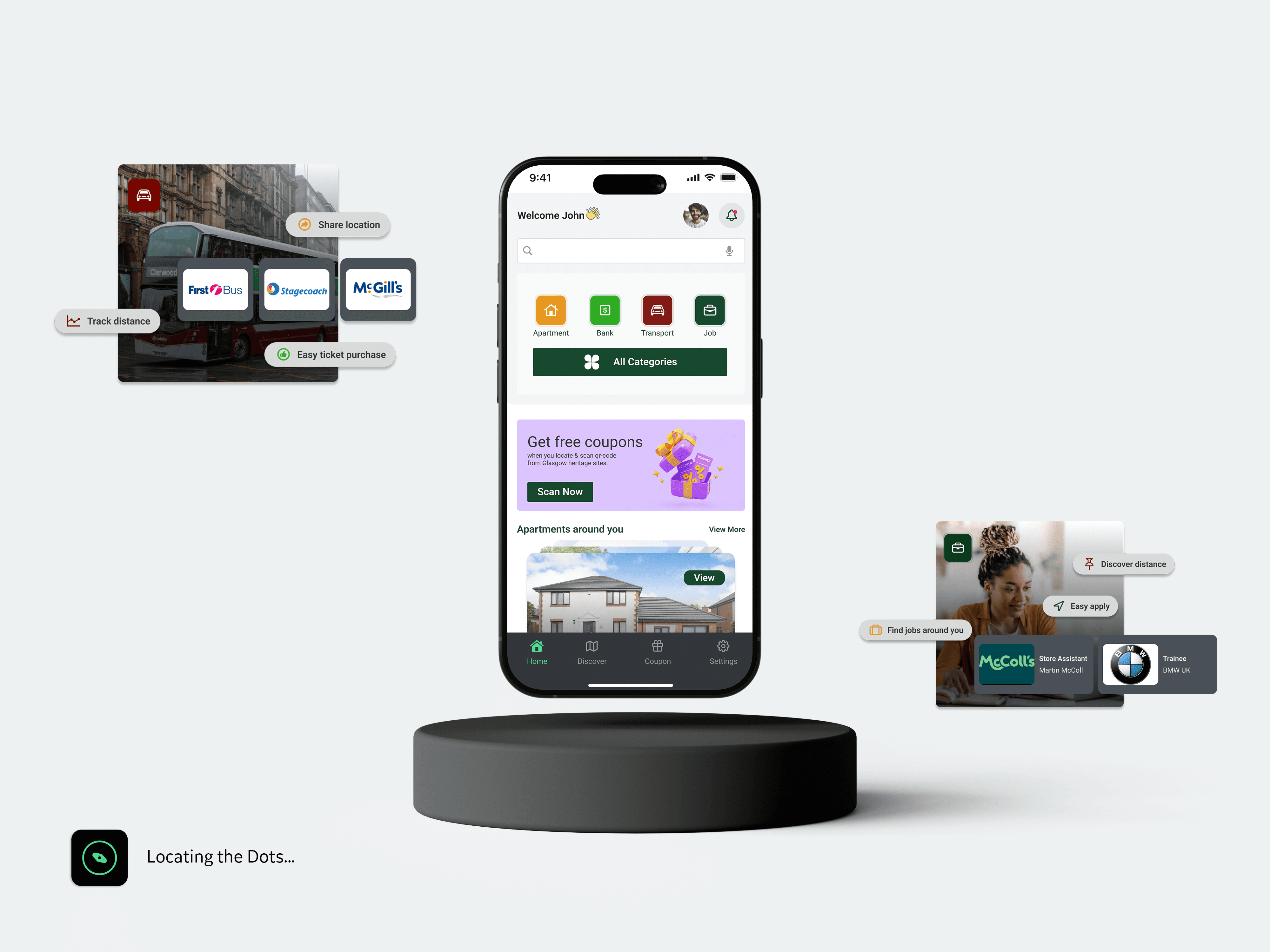
GlasXplore helps university students navigate city life by providing essential services like housing, jobs, and transport. It enhances their experience through personalisation and interactive features.
Role
UX/UI Designer and Research
Industry
EdTech
Duration
3 months (2023)
Overview
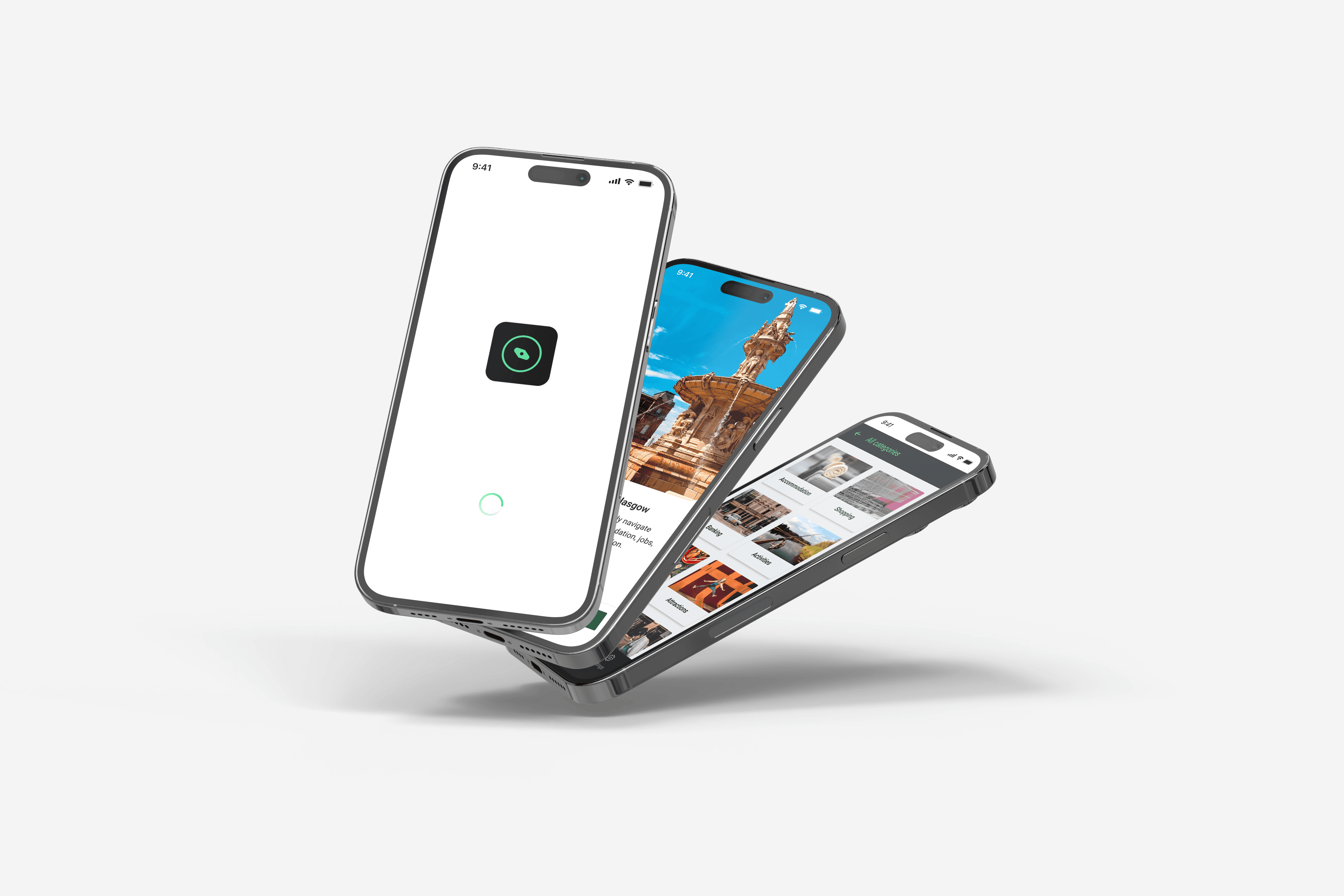
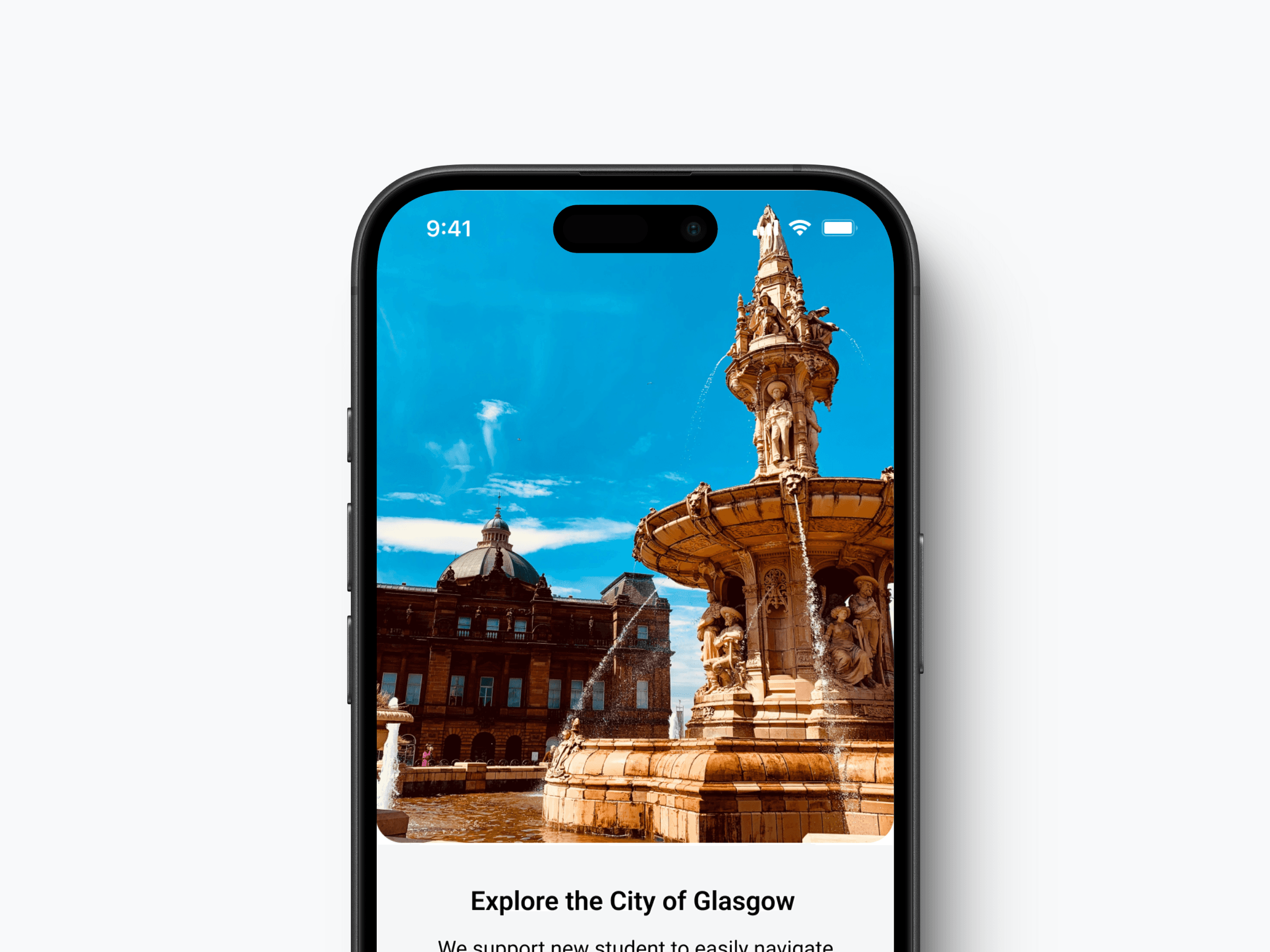
GlasXplore is a mobile app created to assist new students in exploring city life in Glasgow. It provides gamified guidance on nightlife, dining, events, and practical services such as employment, transportation, housing, banking, and language assistance. By integrating interactive content, persuasive design, and user experience principles, the app enhances student experiences and fosters a supportive community. Utilising the Double Diamond design model, which includes the four stages of Discover, Define, Develop, and Deliver, GlasXplore ensures a thorough, user-focused approach to delivering essential information and support for new students.
Problem Statement
New university students often face considerable challenges accessing information and guidance about their surroundings, particularly when studying in a new country. Although extensive information is available online, it is rarely tailored to a specific university, leaving many students struggling to adapt. These difficulties can negatively impact their mental health and, consequently, their academic performance.
The proposed mobile app addresses these challenges by offering engaging, essential information and support on nightlife, dining, and events, as well as practical services such as employment, transportation, accommodation, banking, and language assistance. With personalised features tailored to each city in Glasgow, the app aims to create a more seamless and supportive experience for new students.
Challenge
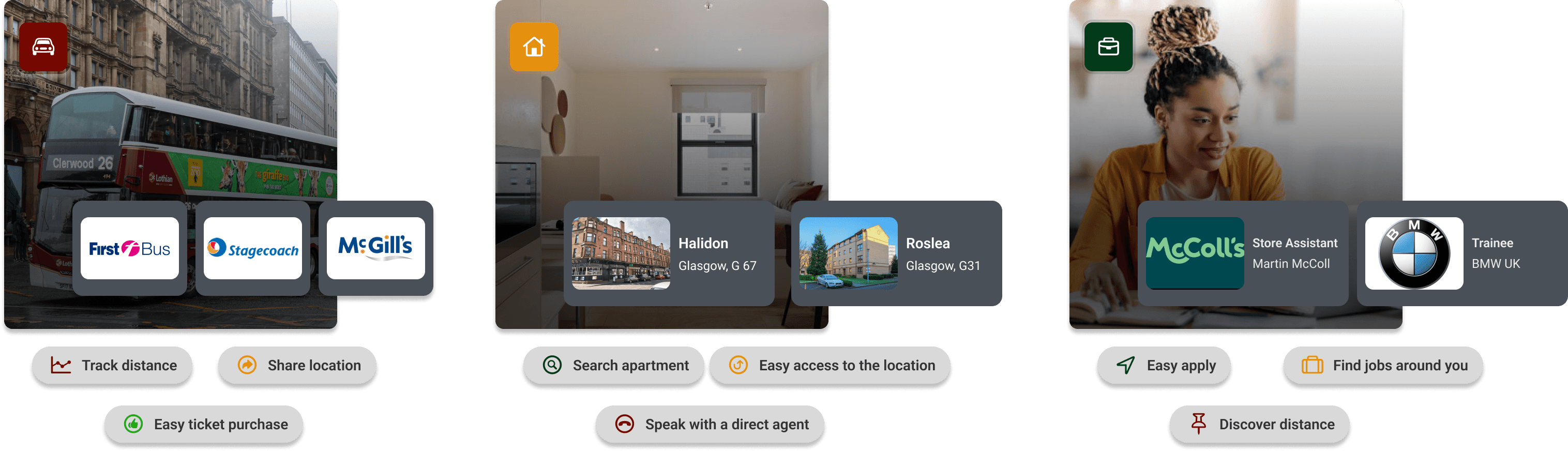
Research, design, and develop an informational system that provides university students with comprehensive guidance and support on employment, transportation, accommodation, banking, and language assistance in Glasgow. The system will include personalised features tailored to their universities, ensuring a user-centric and seamless experience.
User Demographics
The target demographic for this project is university students aged 18 to 30, a critical period when many transition from living at home to managing their lives independently at university. During this phase of newfound independence, students are more receptive to adopting technology and can greatly benefit from digital tools. By focusing on this age group, the project aims to provide essential guidance and support in areas such as employment, transportation, accommodation, banking, and language assistance, helping students navigate this significant life transition with confidence.
Project Goals
Introduce new students to Glasgow's rich cultural diversity and vibrant student life.
Enhance the student experience by offering essential information and guidance on employment, transportation, accommodation, and banking options.
Establish trust by serving as a credible guide and reliable source for information, promotions, and exclusive deals tailored for students.
Prioritise inclusivity and accessibility, ensuring the app caters to students from all backgrounds with features like language assistance.
Design Process
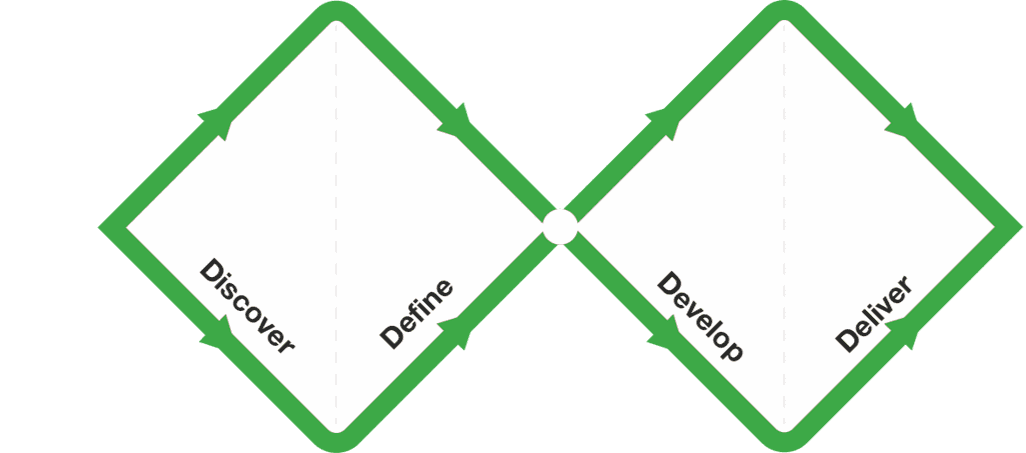
The project utilised the Double Diamond design process model, comprising two key phases: Diamond One (Discover and Define) and Diamond Two (Develop and Deliver). The first phase centres on UX research and exploration to gain a deep understanding of the problem, akin to empathising and defining stages in design thinking. The second phase focuses on ideation, prototyping, and testing to create and refine the solution. This structured approach ensures a user-centred process, addressing user needs comprehensively, optimising solutions, and successfully delivering the final product for maximum impact.
Discovery Stage
Secondary Research: Understanding the user
The discovery phase began with secondary research to gather insights on user demographics and indirect competitors. As the project is in its pilot phase, and approval for primary research was limited, the study relied on reviewing existing literature and online documentaries. These sources explored new students' experiences, challenges, and existing applications designed to address their needs. This approach provided a vital understanding of the system's gaps, which have been identified and summarised below.
Target Users & Findings:
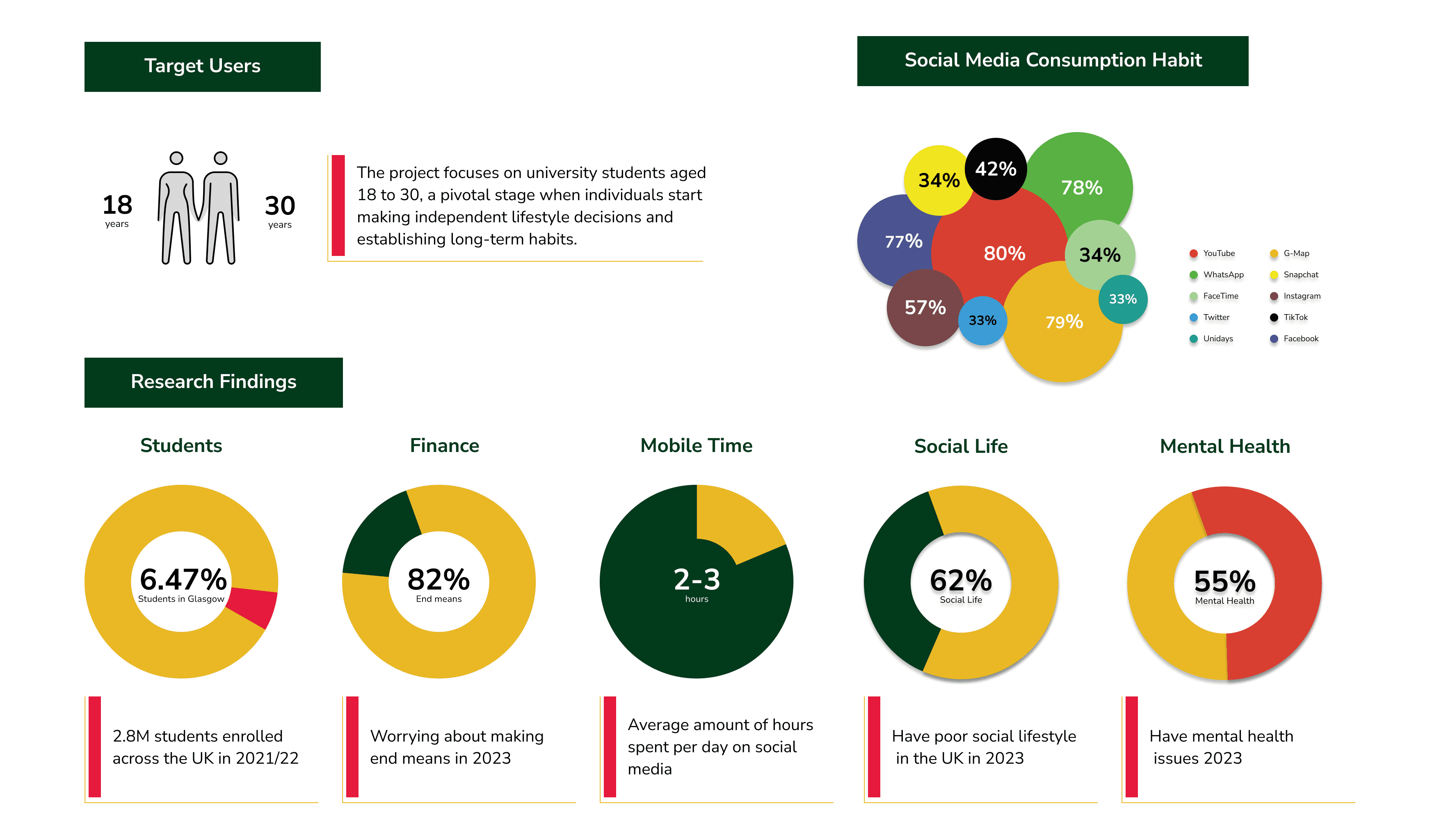
Students: Represent 6.47% of users, particularly in Glasgow, contributing to 2.8M students enrolled across the UK (2021/22).
Financial Concerns: 82% worry about making ends meet (2023).
Social Media Usage: Users spend an average of 2-3 hours daily on social media platforms.
Social Life: 62% report having a poor social lifestyle in the UK (2023).
Mental Health: 55% of individuals experience mental health issues (2023).
Key Insights for GlasXplore Mobile App
Target Audience:
University students are a significant demographic, with 2.8 million students enrolled across the UK, particularly in cities like Glasgow.
This group relies heavily on technology, with 2-3 hours daily on social media platforms.
Financial Concerns:
With 82% of students worrying about finances, GlasXplore can provide valuable resources on affordable housing, budget-friendly dining, employment opportunities, and exclusive student deals to alleviate financial stress.
Social Life Challenges:
62% of students report poor social lifestyles, indicating a strong need for an app that connects them to local events, nightlife, and opportunities to build social connections.
Mental Health Support:
Given that 55% of students experience mental health issues, GlasXplore can incorporate features promoting well-being through community engagement, resource signposting (e.g., mental health services), and promoting a sense of belonging.
Social Media Integration:
Popular platforms like YouTube (80%), Google Maps (79), WhatsApp (77%), Instagram (57%), and TikTok(42%) dominate student usage. GlasXplore can leverage these channels for user acquisition, content sharing, and community building, ensuring seamless integration that aligns with user habits.
Competition Analysis
A competitive analysis was conducted to identify market trends, competitor strategies, and potential opportunities. This analysis provided valuable insights for making informed decisions, differentiating offerings, and gaining a competitive advantage. The focus was on applications designed to promote pro-environmental behaviour, which aligns with this project's goals.
Opportunities for GlasXplore
Holistic, Student-Centric App: Combine transportation, flexible employment, and student housing features in one platform.
Personalised Recommendations: Tailor services to individual student needs with exclusive deals and university-specific resources.
Additional Features: To support students' broader needs, language assistance, social event listings, and mental health resources should be included.
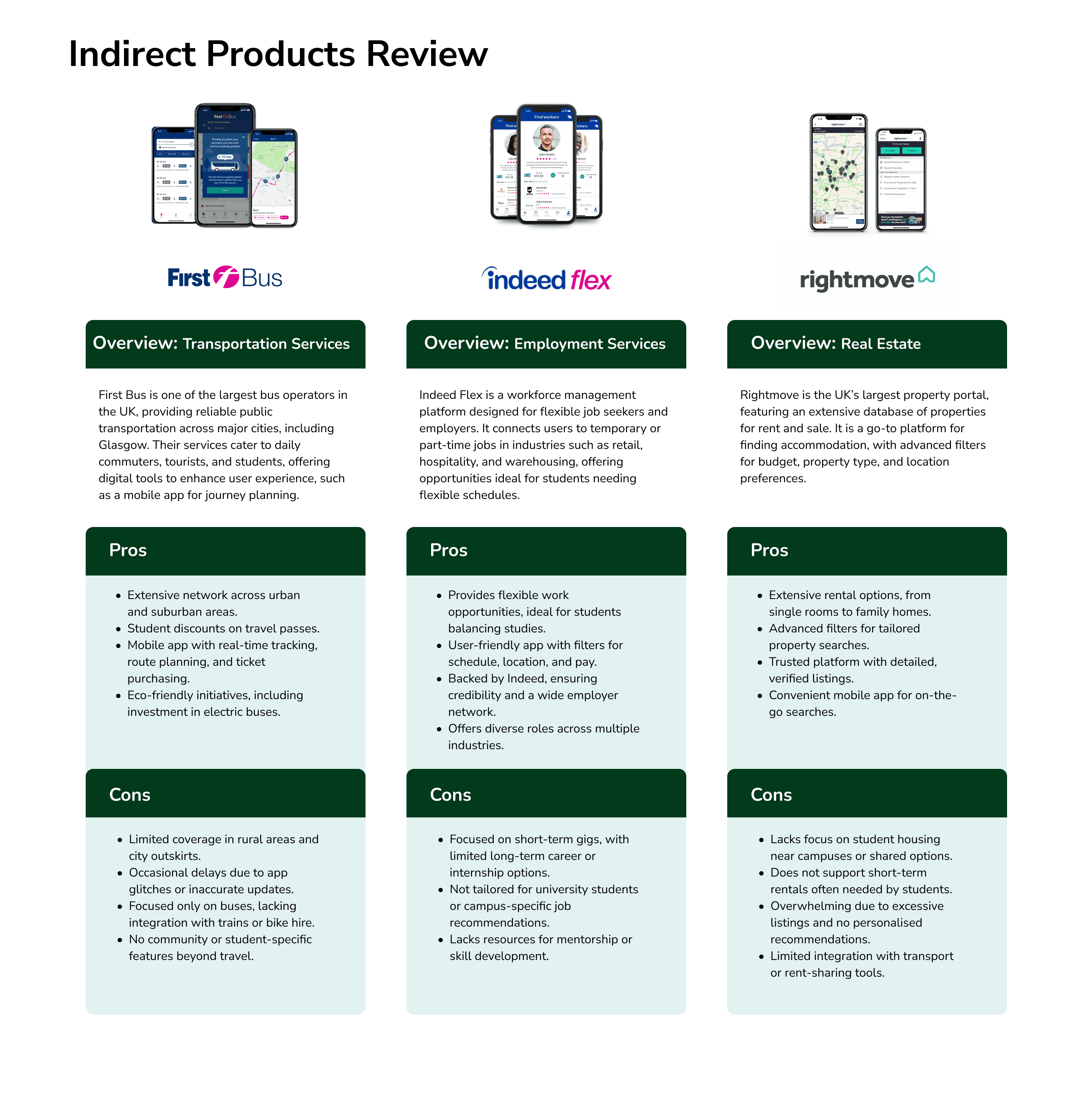
Strategic Partnerships: Collaborate with platforms like First Bus, Indeed Flex, and Rightmove to integrate their services, offering a comprehensive resource hub for students.
Define Stage
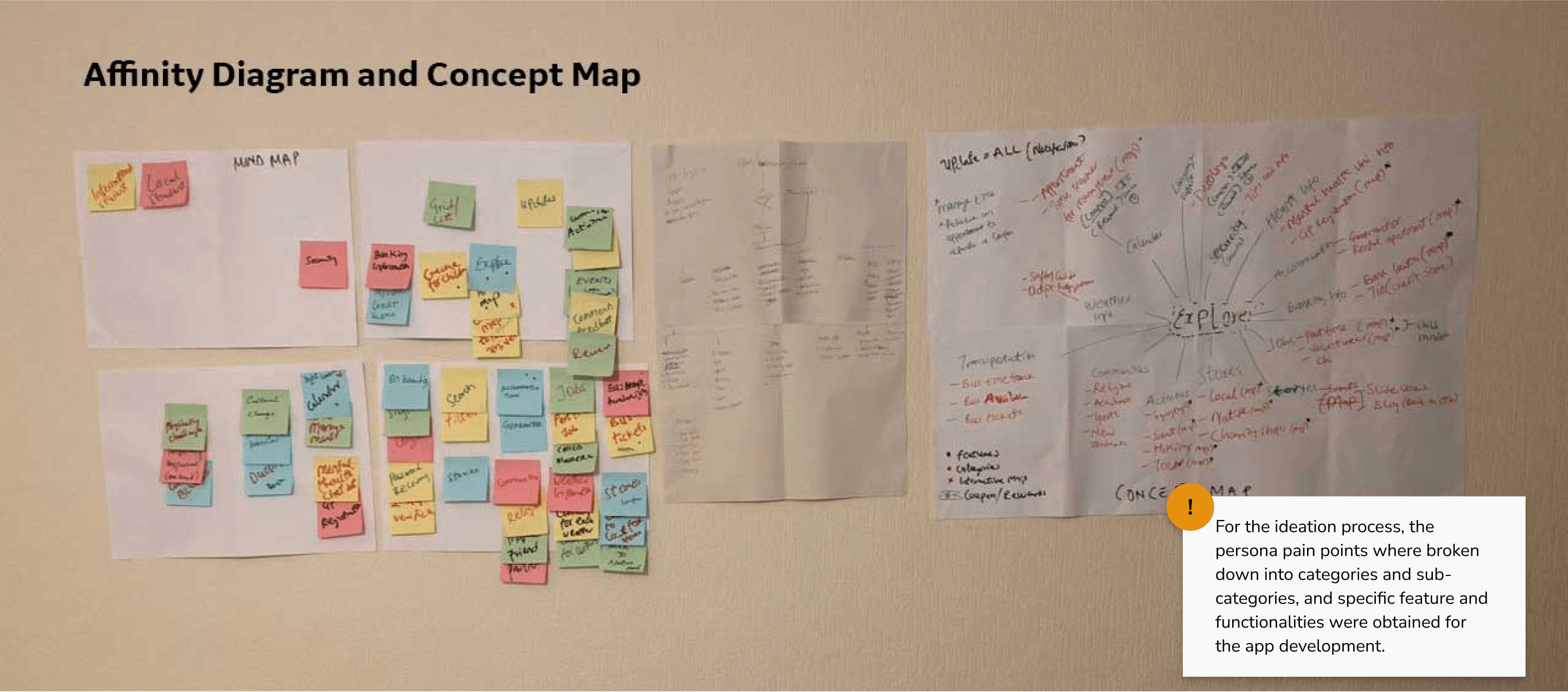
The Define phase began with creating an Affinity Diagram, concept map, and empathy map using insights from the Discovery stage. These tools helped organise extensive information into related groups, fostering a deeper understanding of the target demographic.
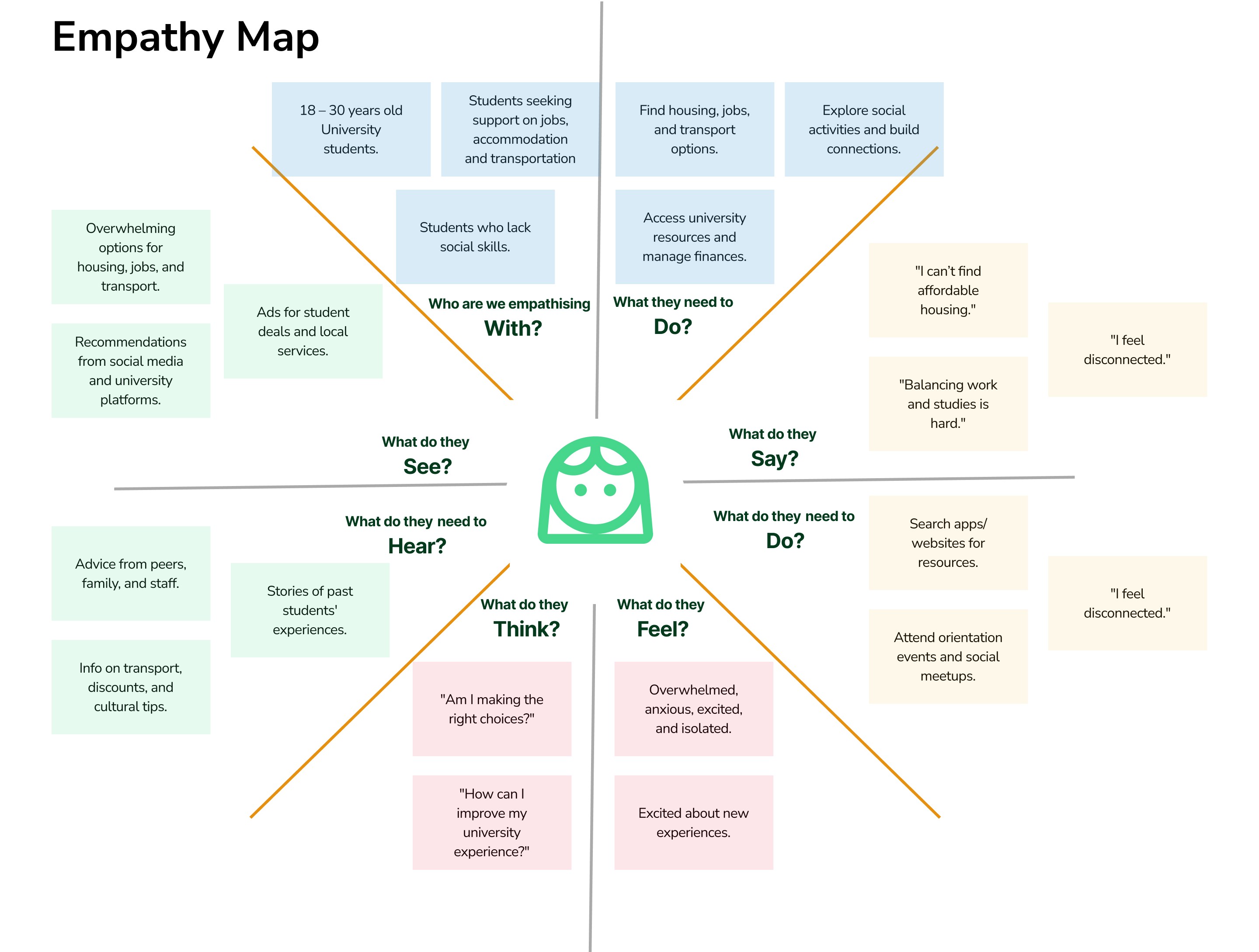
The empathy map focused on identifying the user’s perspective, what they see, hear, say, do, think, and feel, while highlighting their pain points and perceived benefits. These insights were crucial in developing user personas in the next phase, ensuring the app’s design effectively addresses and resonates with the target audience.
User Persona
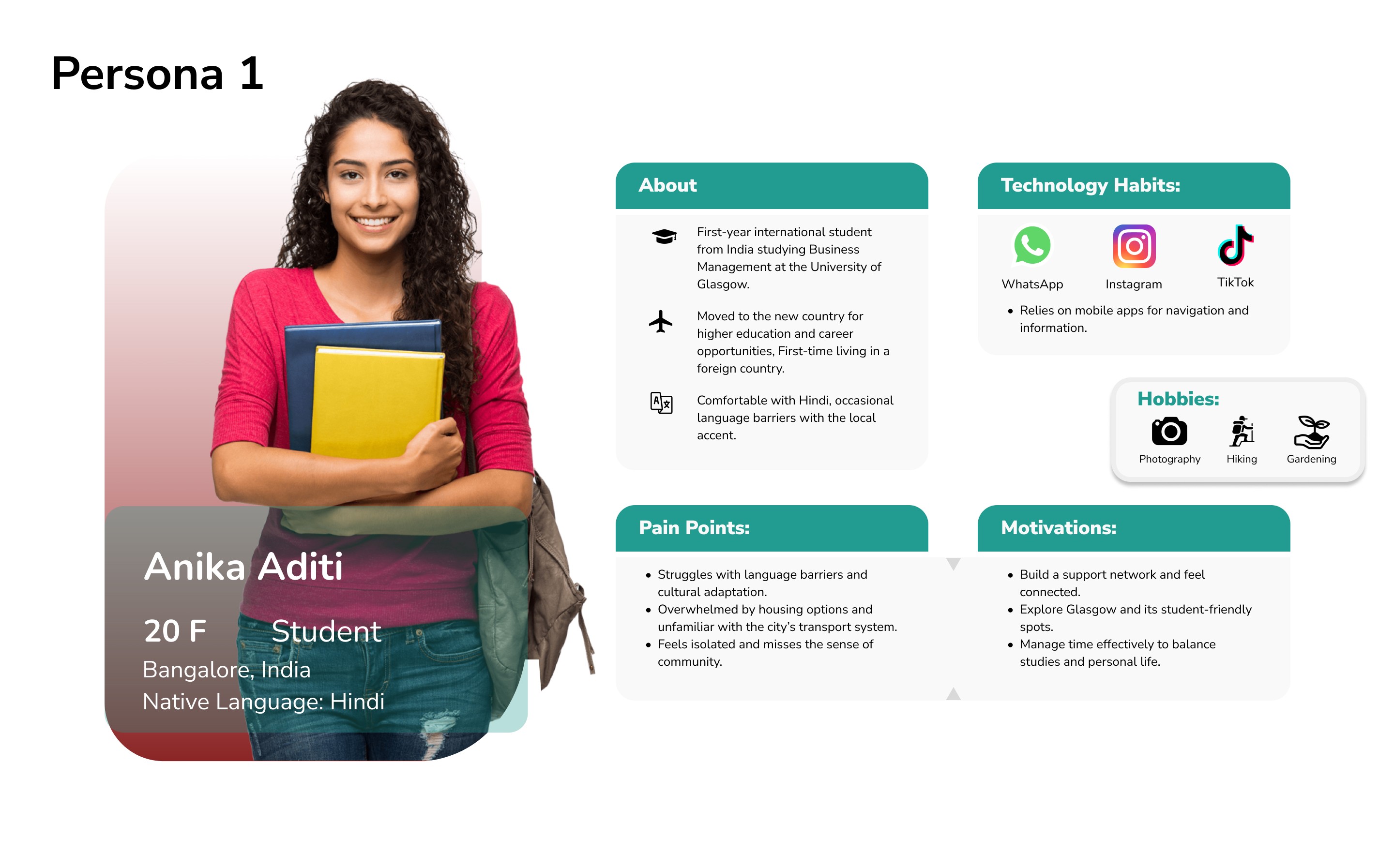
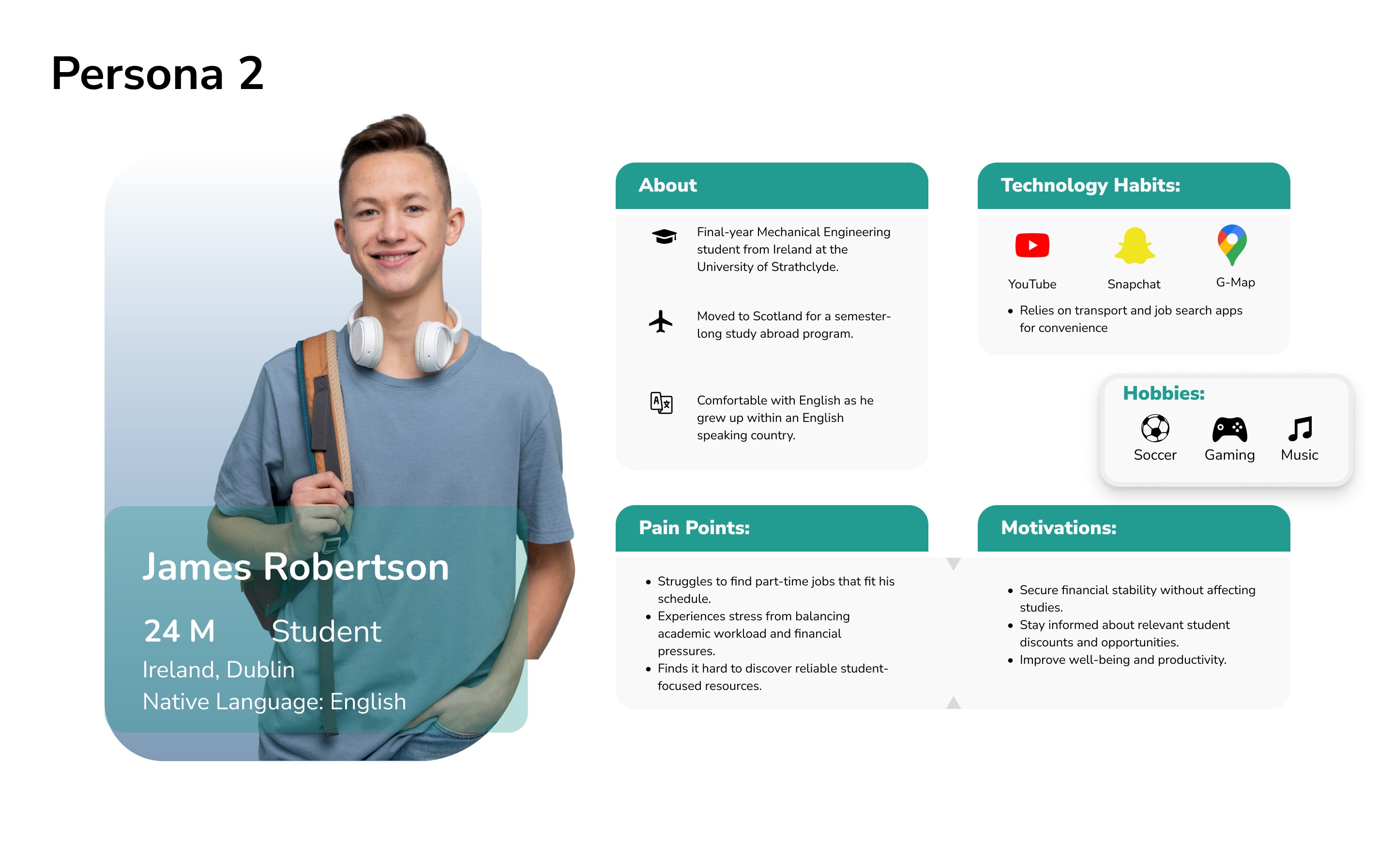
Two user personas were created to address the target demographic's diverse needs, preferences, and behaviours. These personas represent distinct segments of the user group, highlighting their unique characteristics, goals, and challenges.
Point of view (POV)
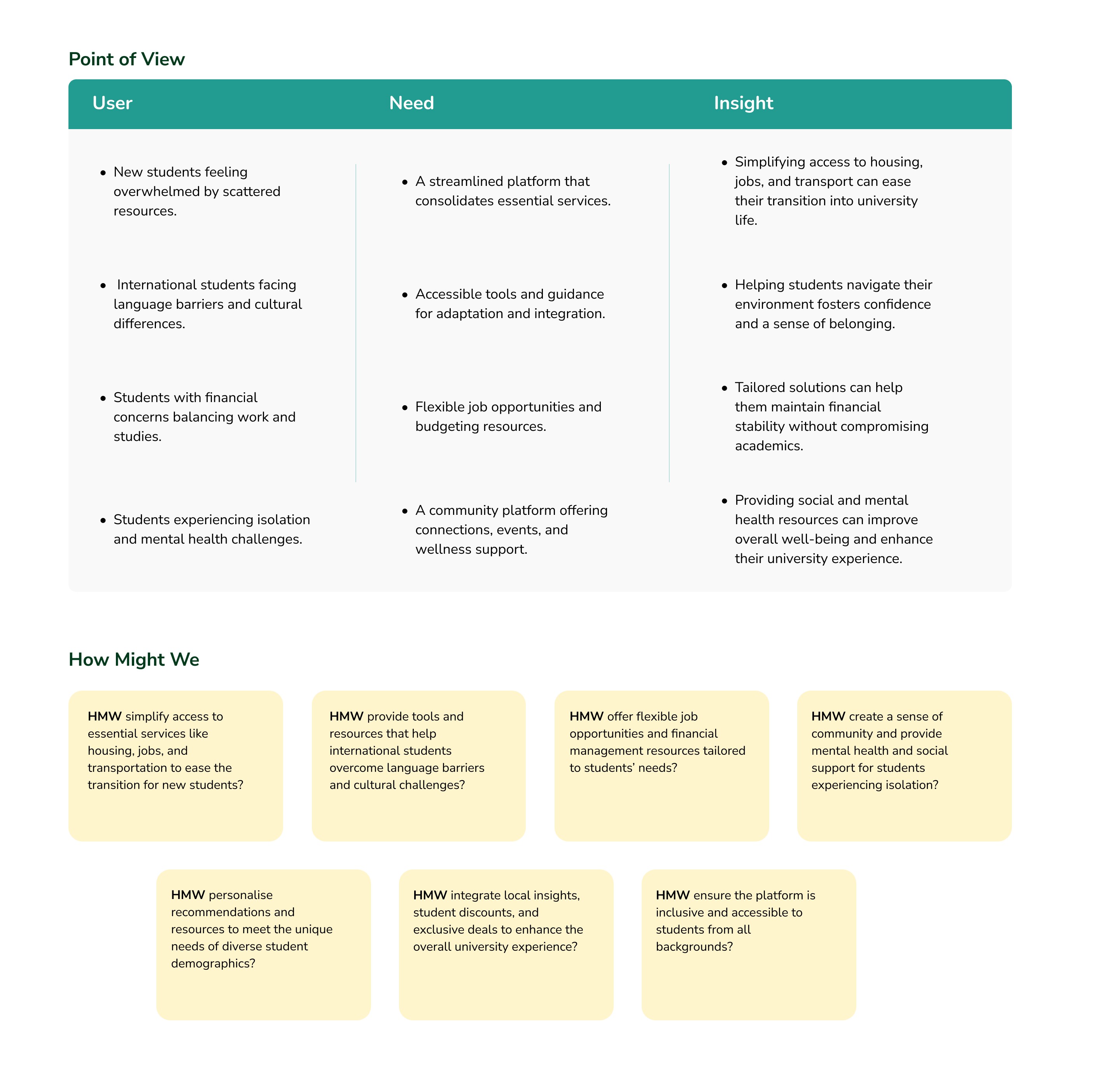
As the project progressed into defining the Point of View (POV) for GlasXplore, the focus shifted to aligning the design with insights from the Discovery phase. The POV ensures the app remains user-centred, clearly framing students' challenges and guiding ideation toward effective, tailored solutions.
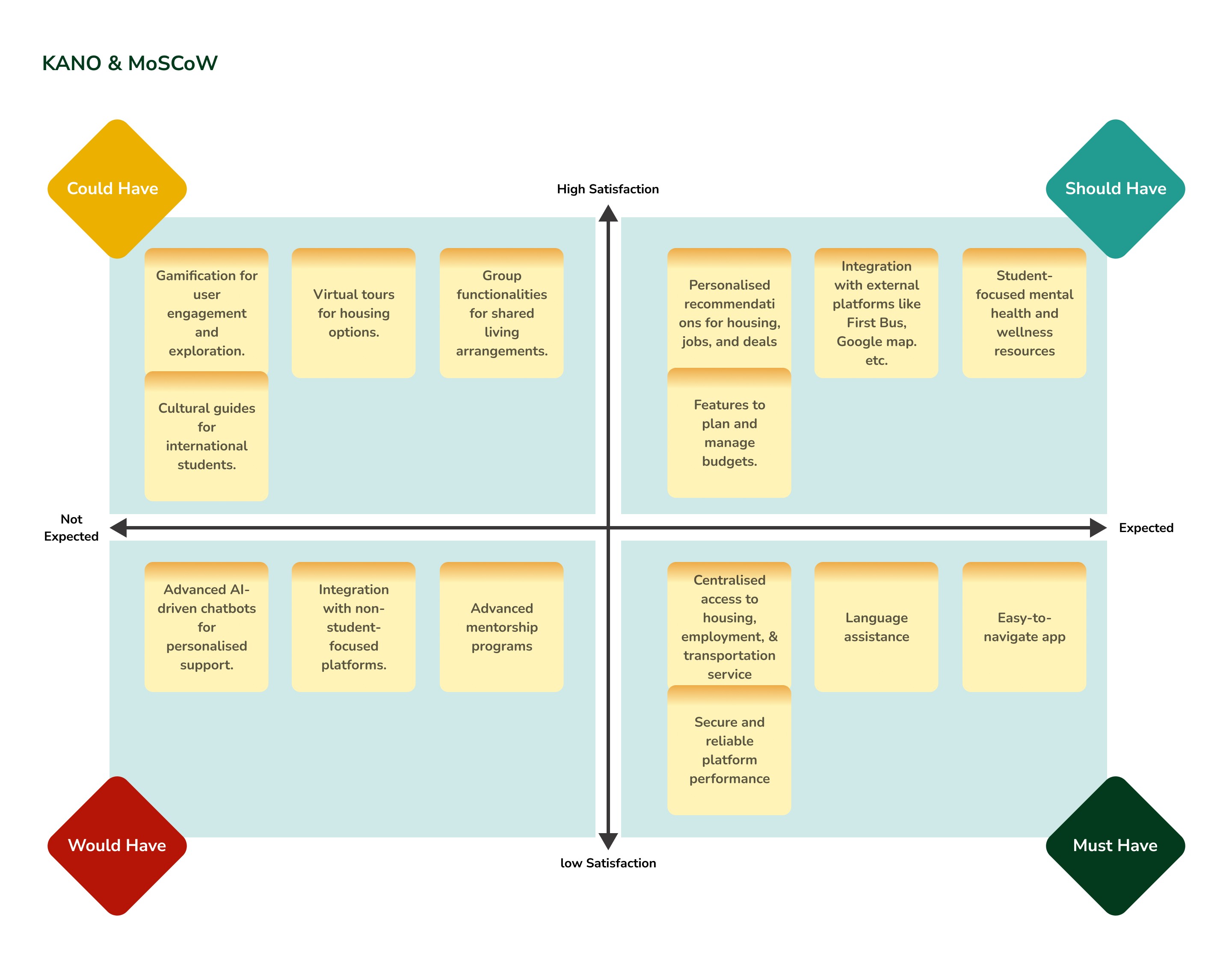
KANO & MoSCoW Prioritising
After identifying the problem statement and user needs, "How Might We" questions reframed these challenges into opportunities for innovation, focusing directly on user needs. These questions were grounded in insights from the secondary research, ensuring a strong foundation for the design process.
Develop Stage
The development phase focuses on ideating and prototyping multiple solutions to the defined problem. It involves brainstorming, sketching, and creating prototypes using tools like personas, wireframes, and MVPs to visualize and test ideas. This phase encourages divergent thinking, and exploring various solutions and approaches. The outcome is a range of prototypes or preliminary solutions that can be tested and refined based on feedback, ensuring the solutions are viable and effective.
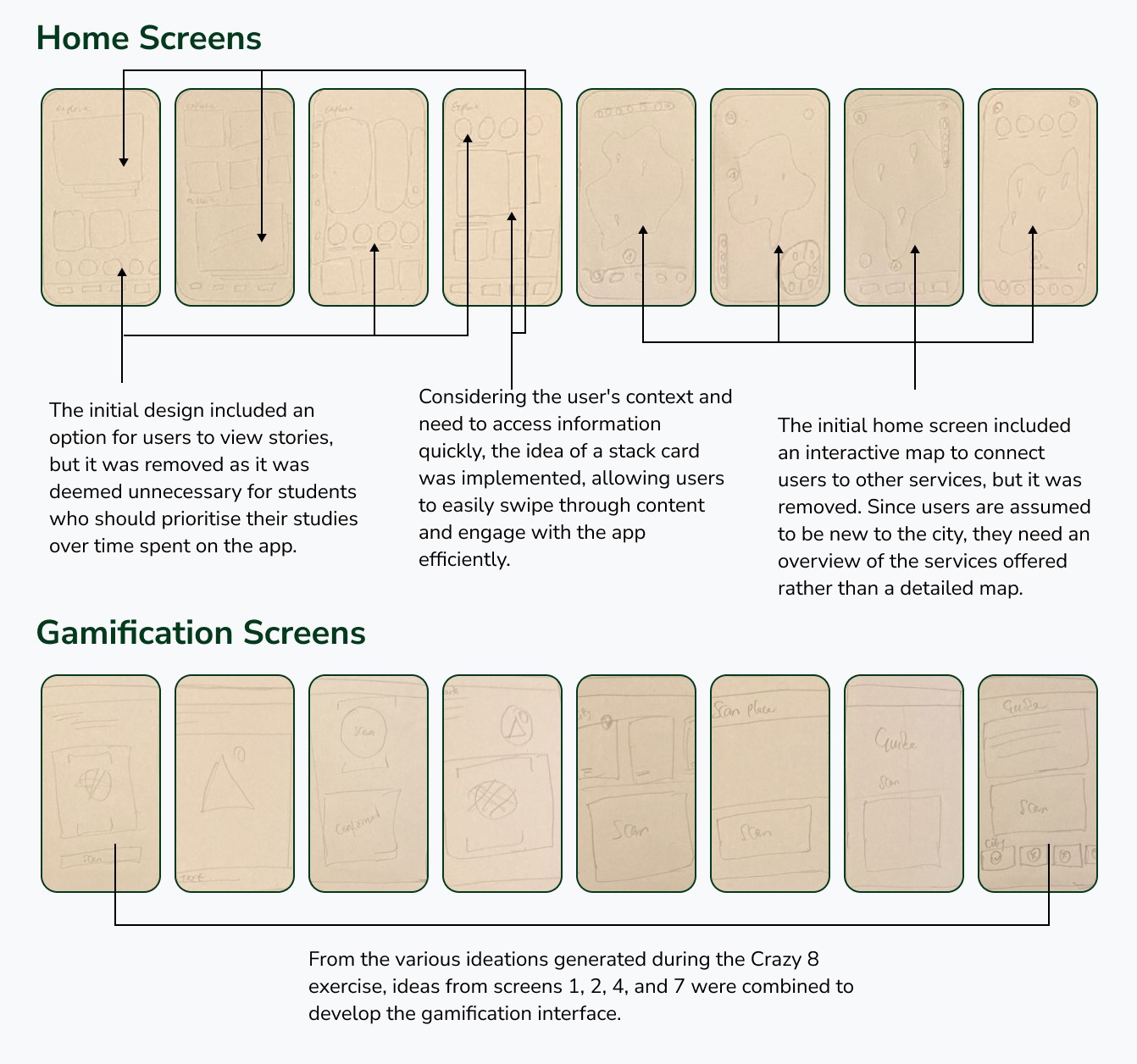
Crazy 8s
The crazy Eights method was used during the ideation stage to generate multiple ideas based on gathered insights. The goal was to quickly create a range of ideas, ultimately narrowing down to one or a few solutions that could be prototyped.
Information Architecture
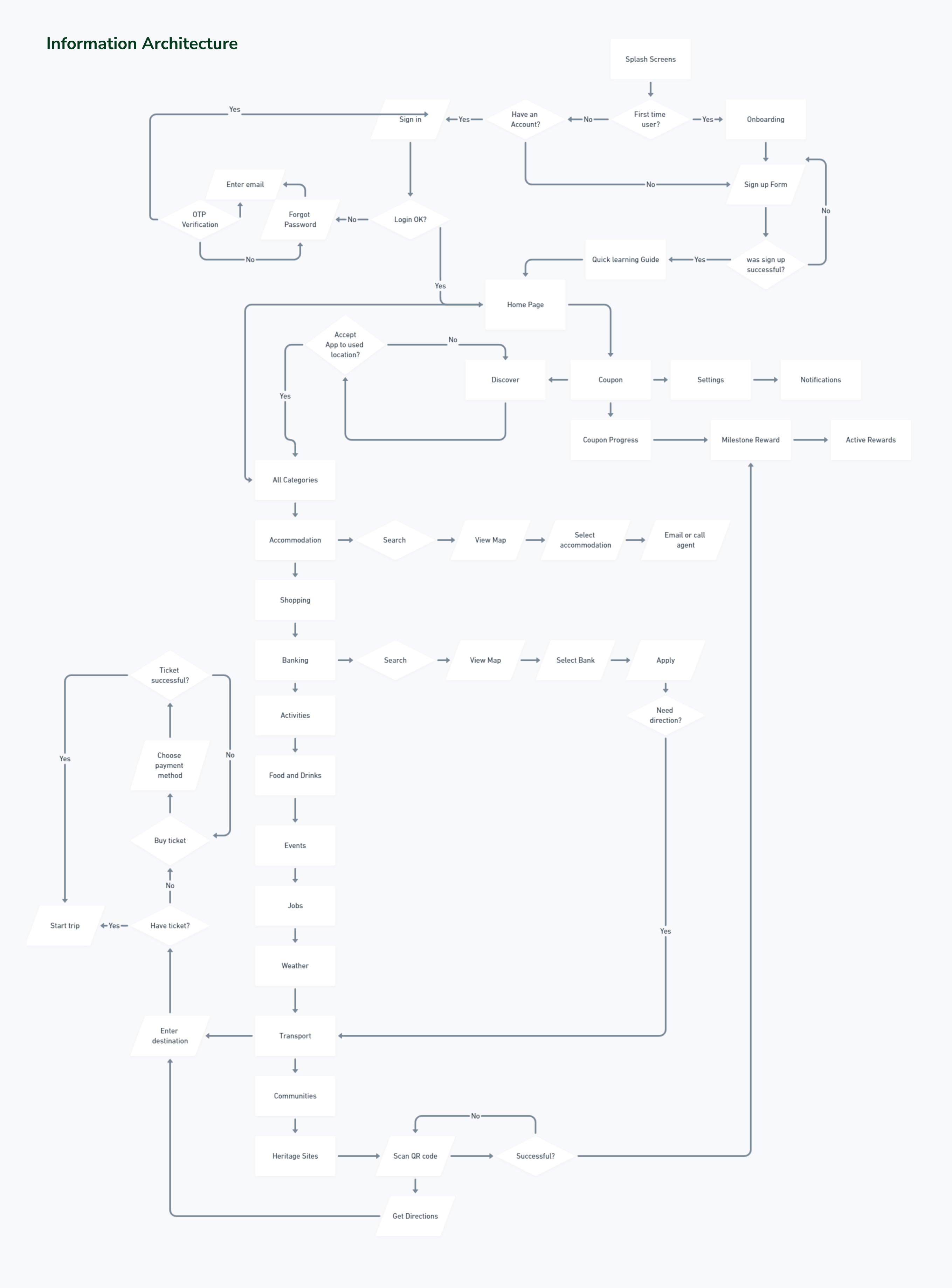
With a deep understanding of the GlasXplore user's needs through secondary research, and ideation using Crazy 8s, an Information Architecture (IA) was developed to organize and label the app's content clearly and intuitively while focusing on MVP features. This ensures that users can easily navigate the app, access relevant information, and engage with features seamlessly, aligning with their expectations for a smooth, user-friendly experience.
Wireframe
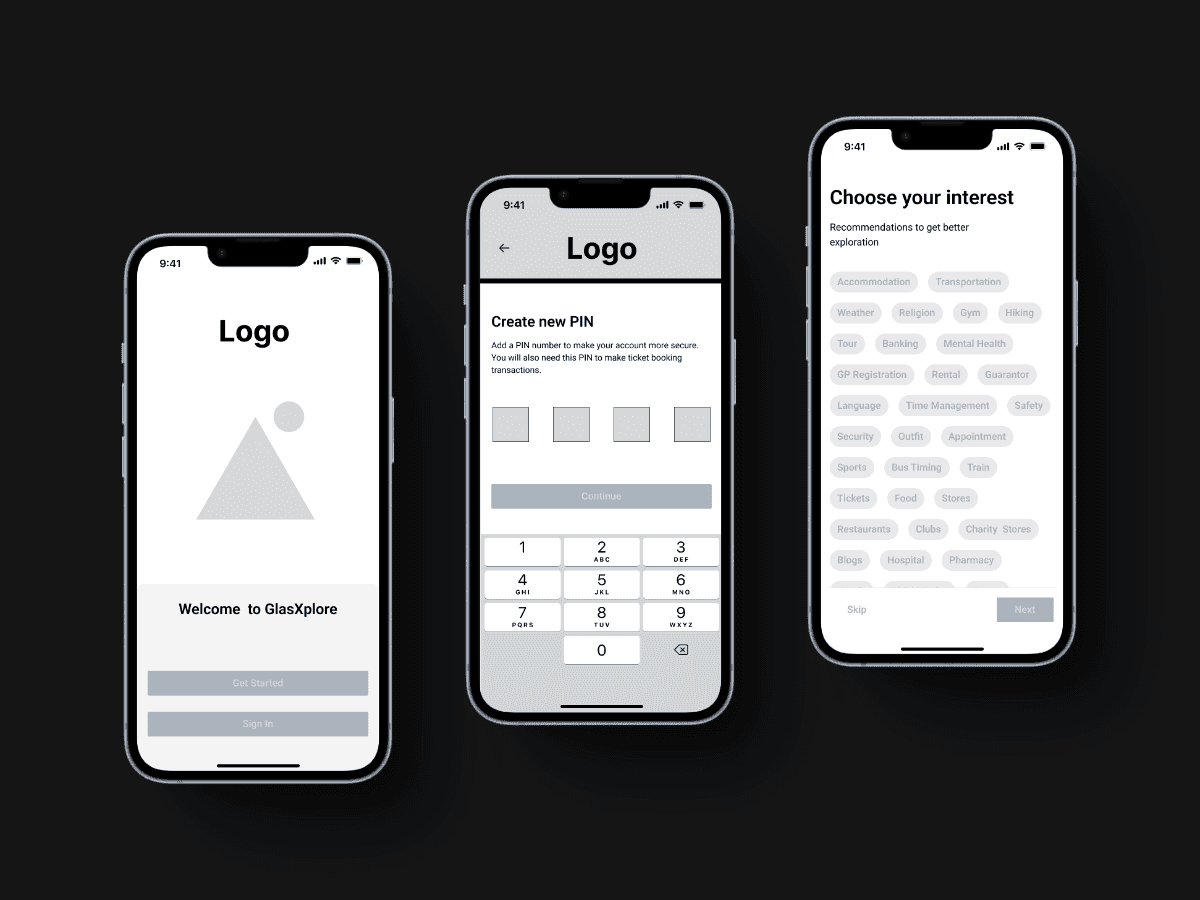
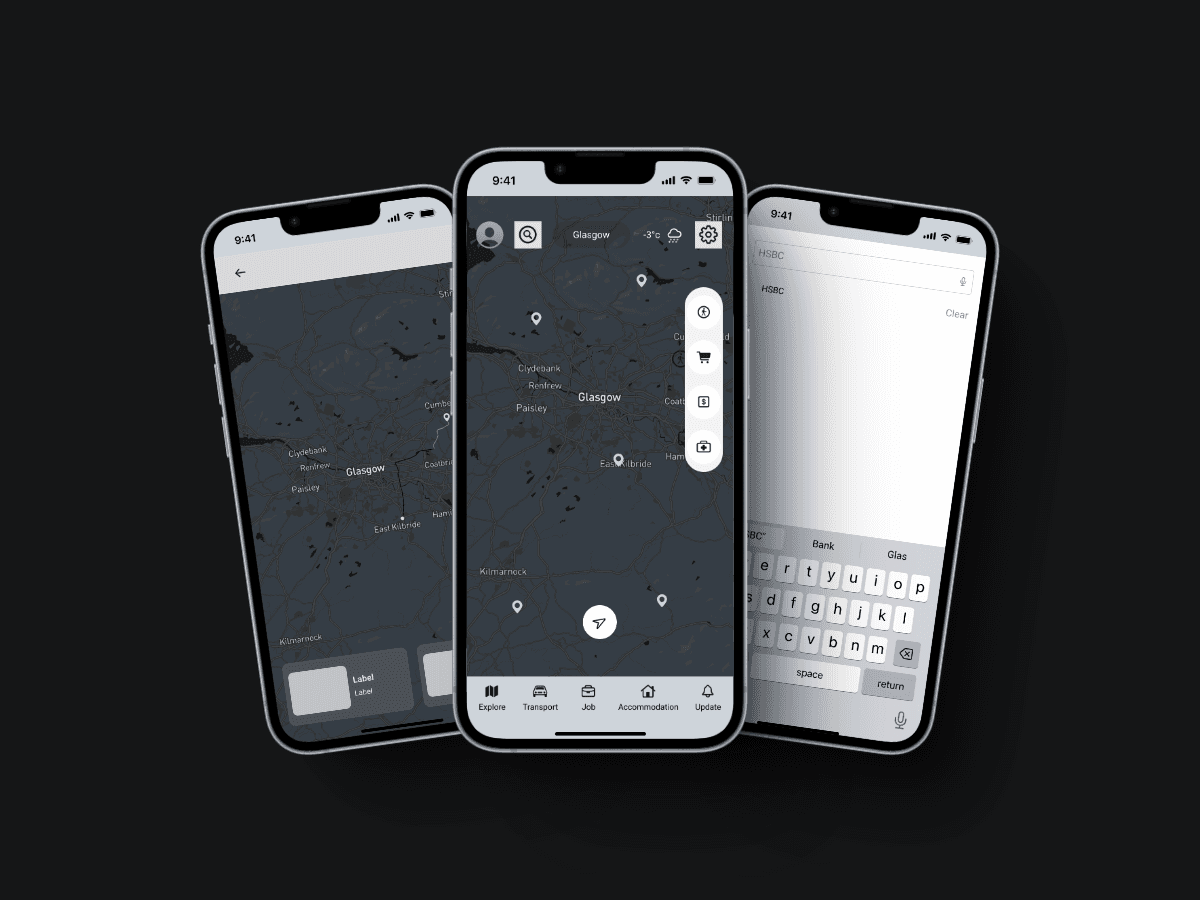
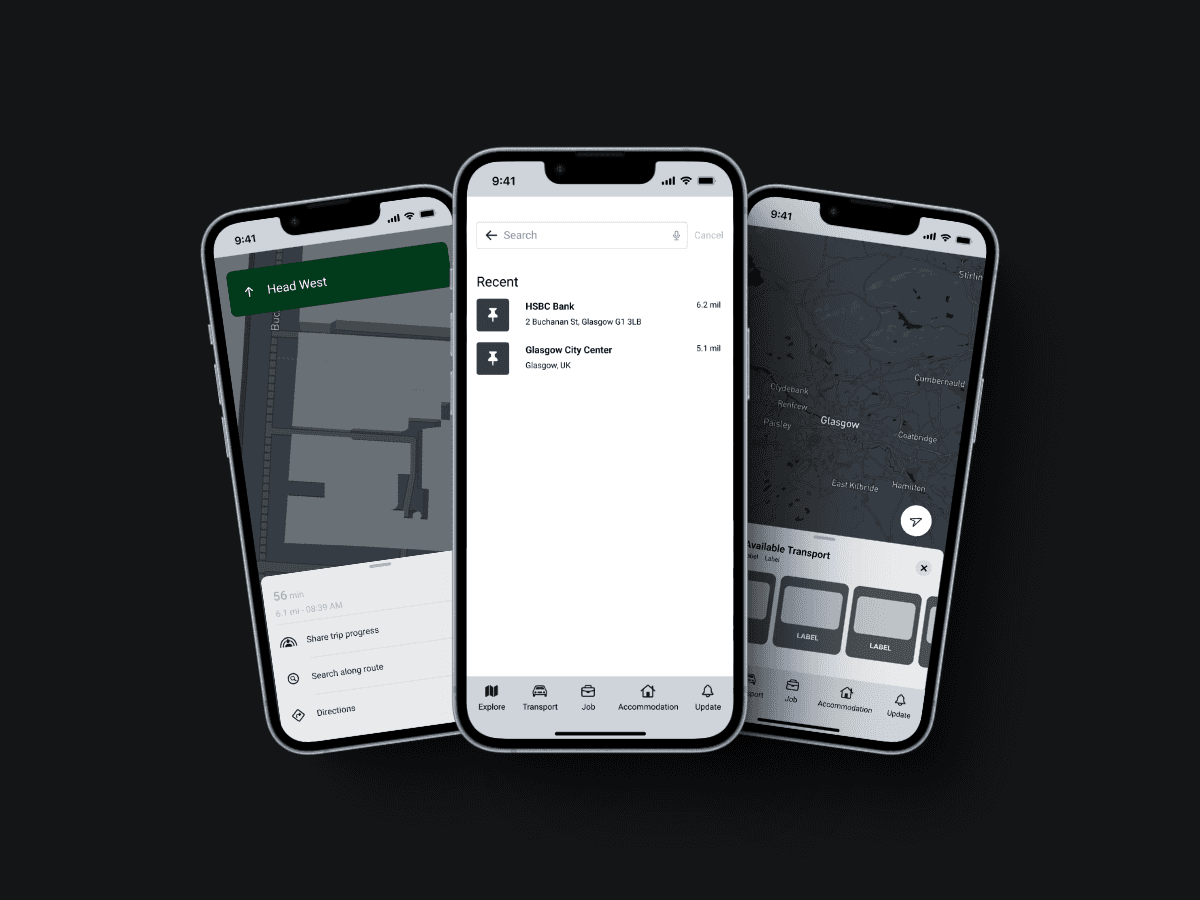
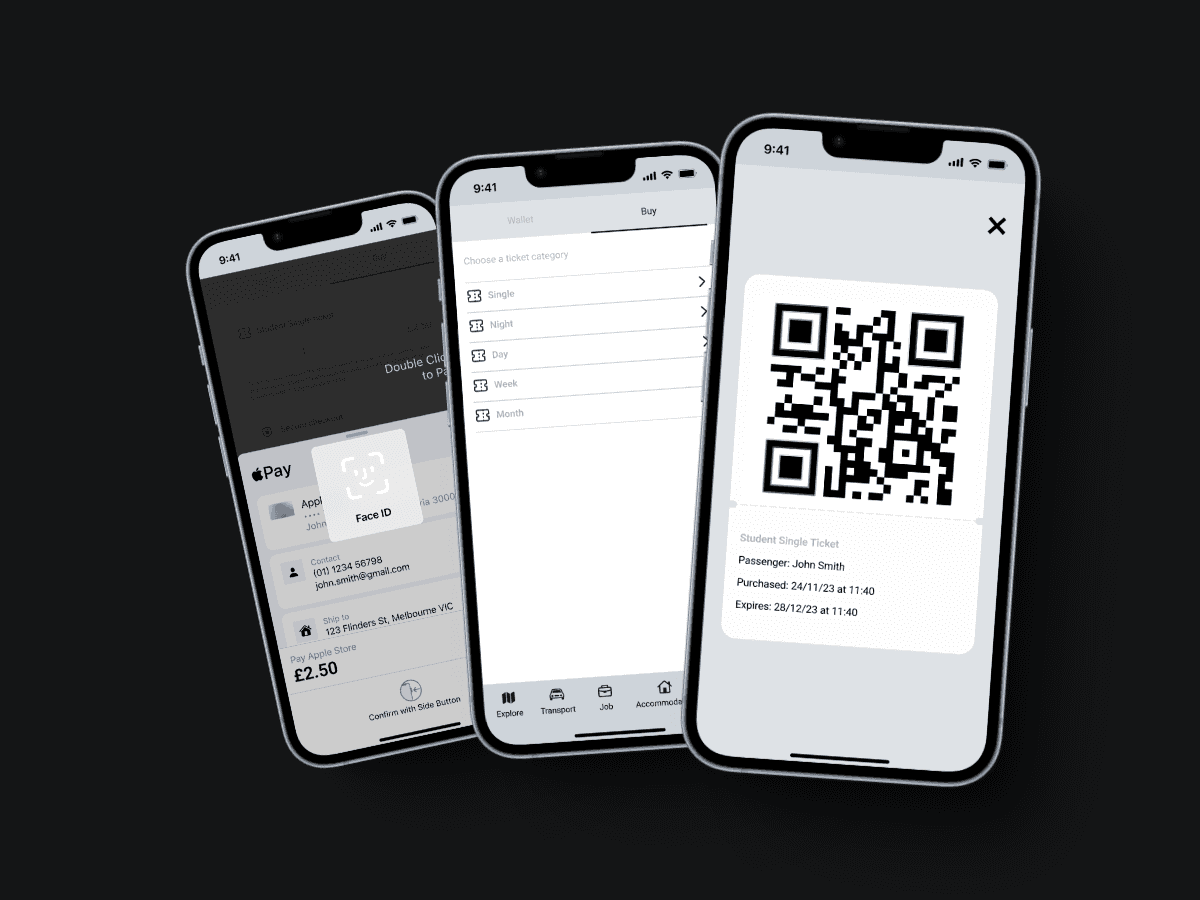
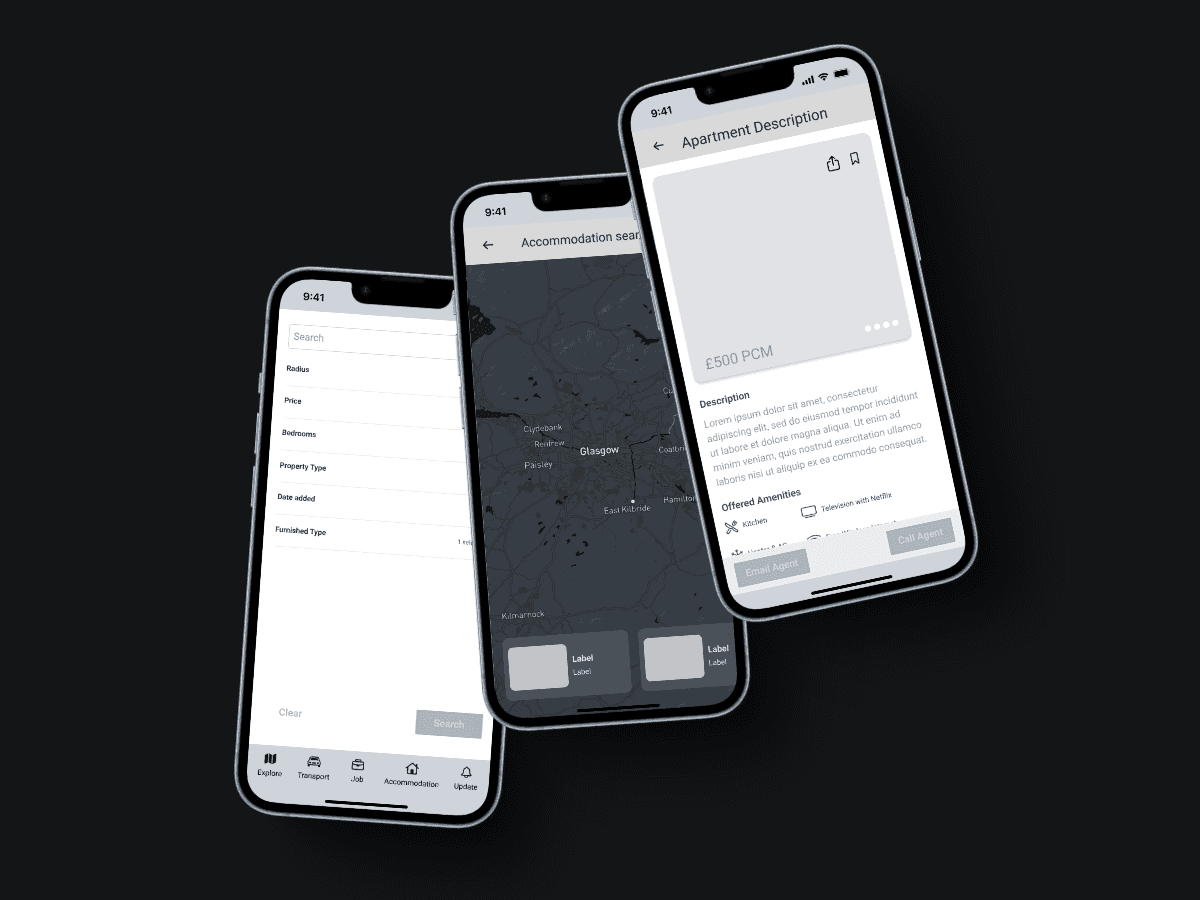
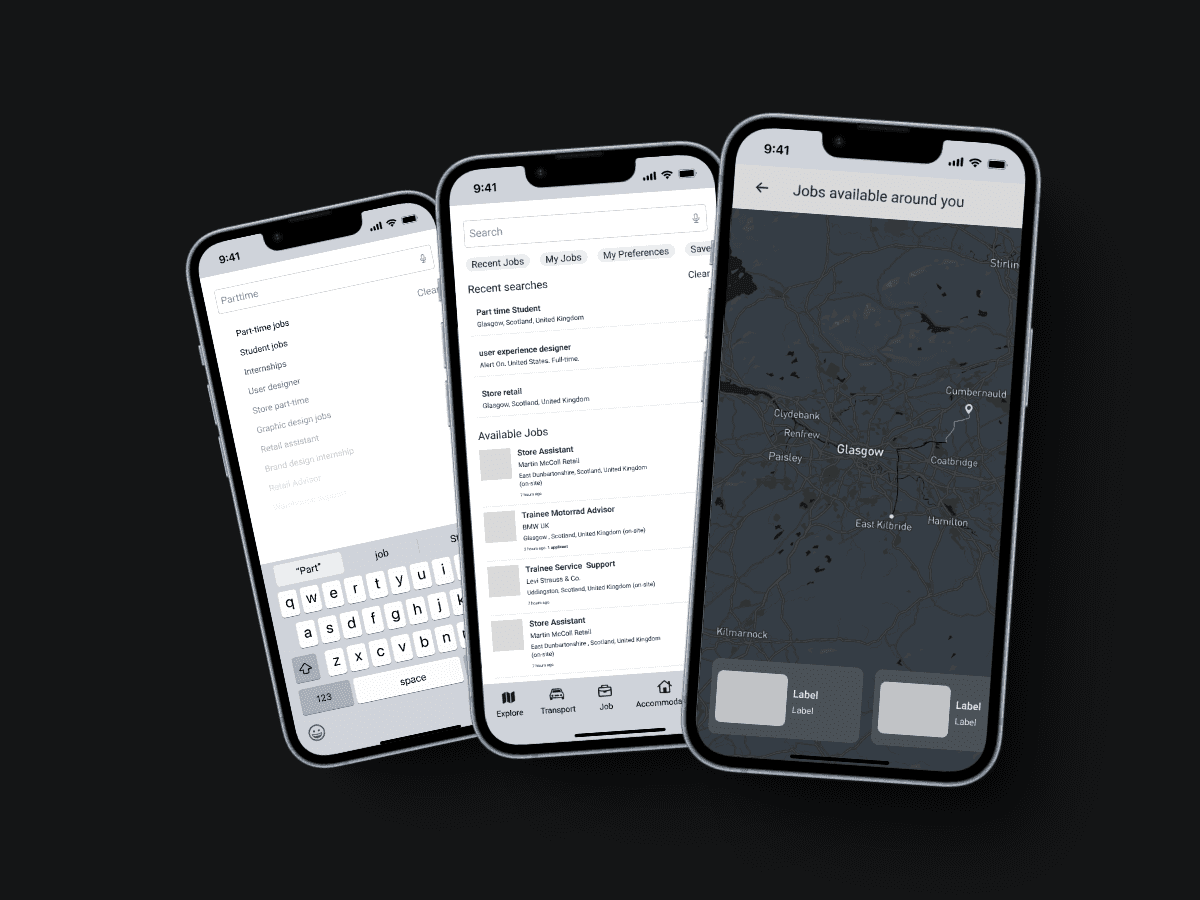
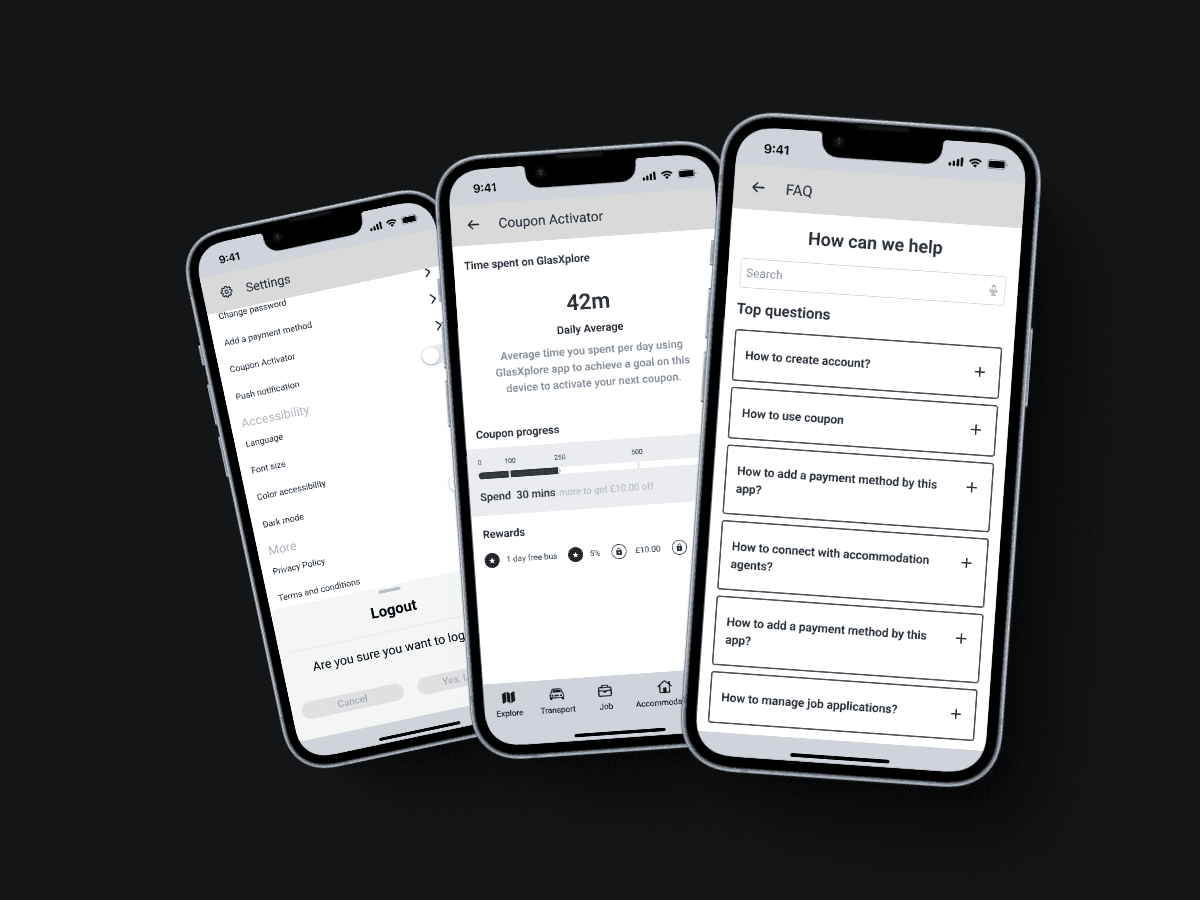
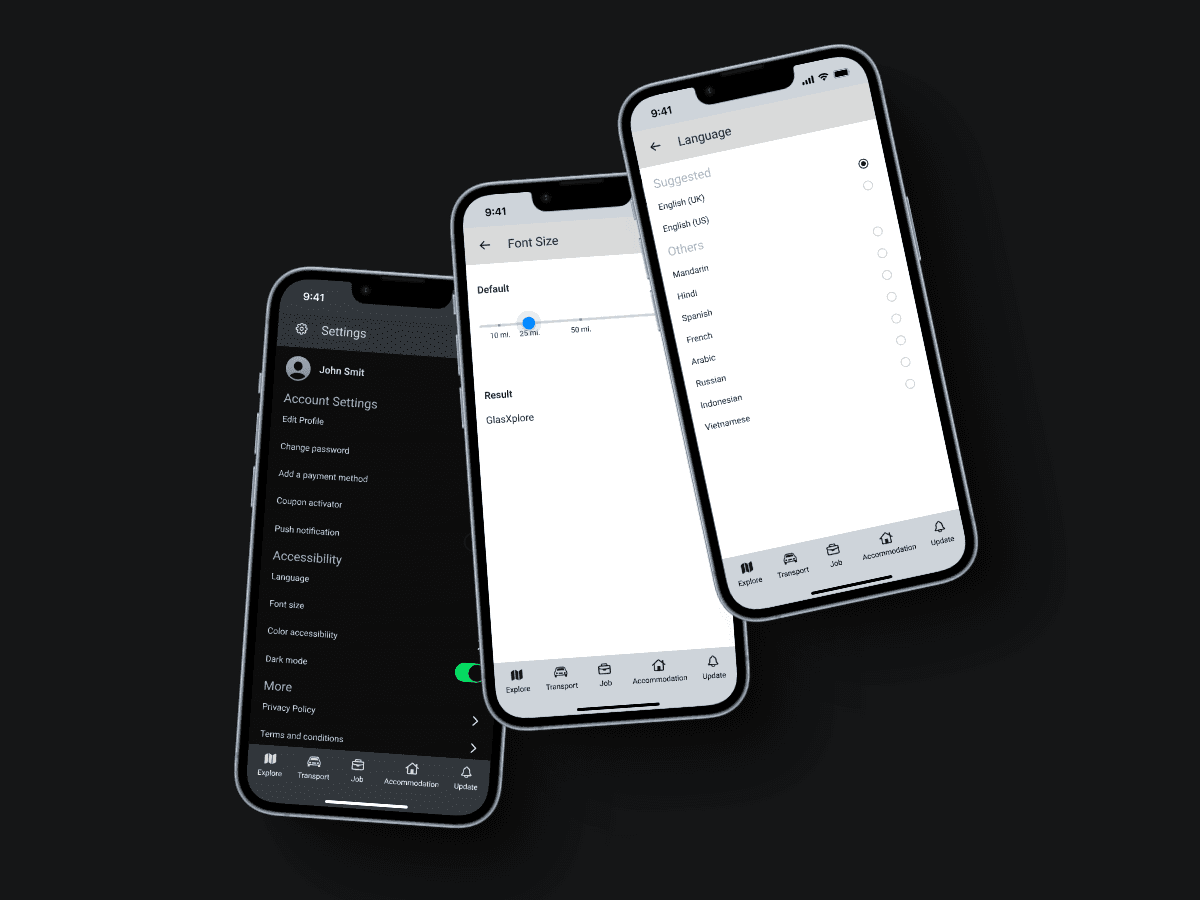
After clearly understanding the project's objectives, a mid-fidelity wireframe was created to visualise the design's structure and layout. This phase focused on applying UX design principles to ensure the wireframe was efficient, user-friendly, and aligned with user needs, enhancing the overall digital interaction and user experience.
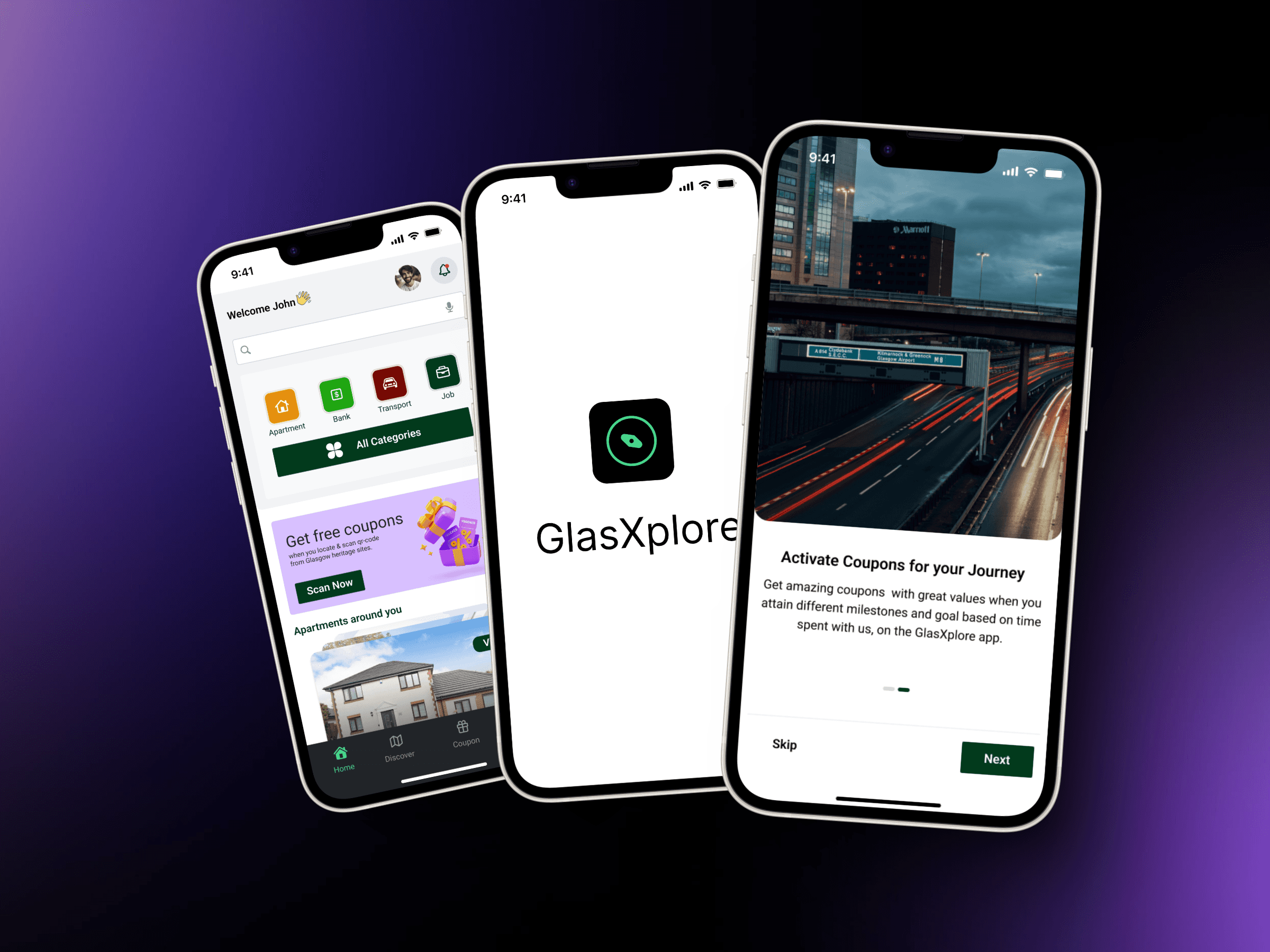
Onboarding Screens
Home and Search Screens
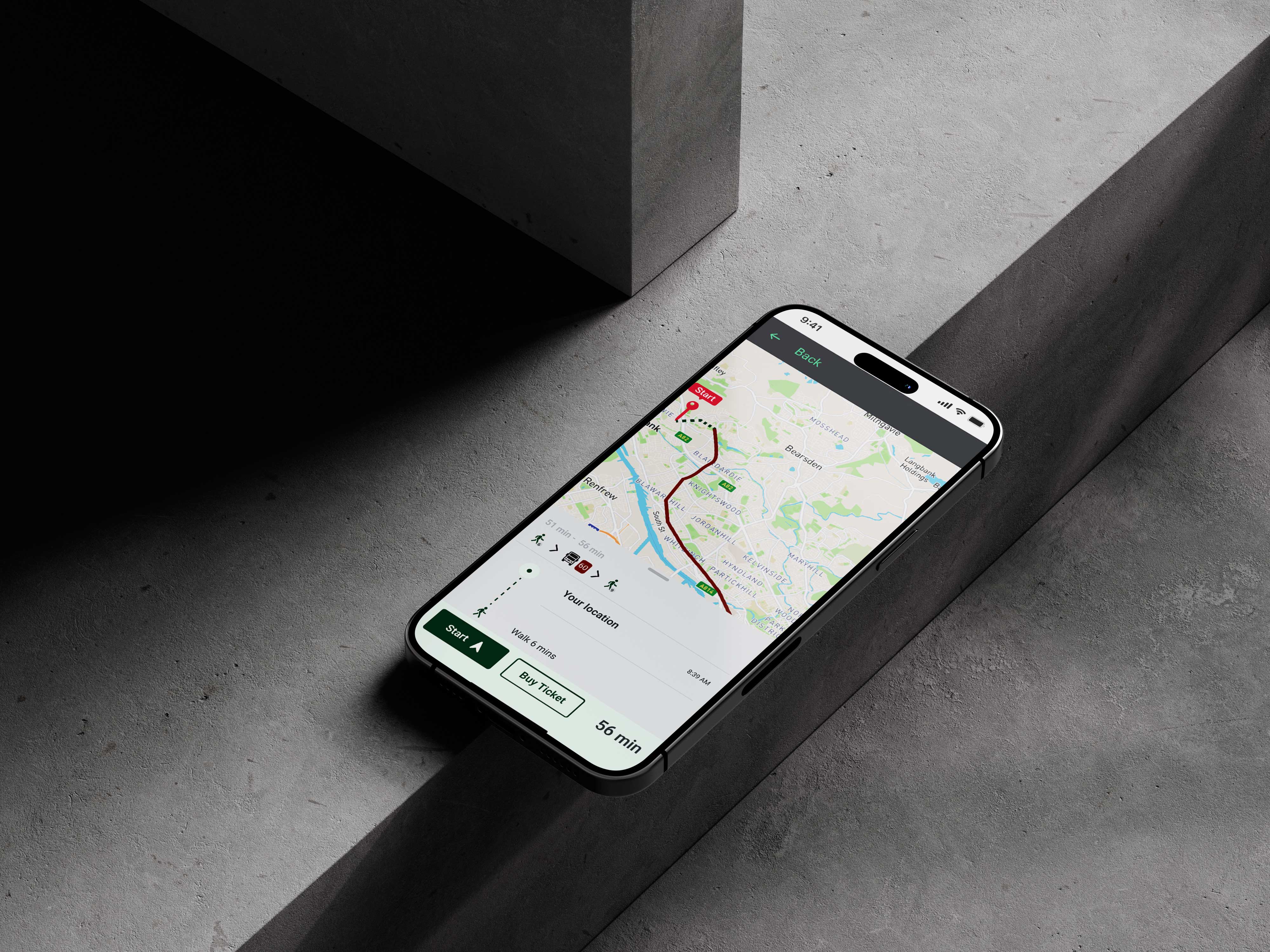
Transportation Screens
mTicket Booking Screens
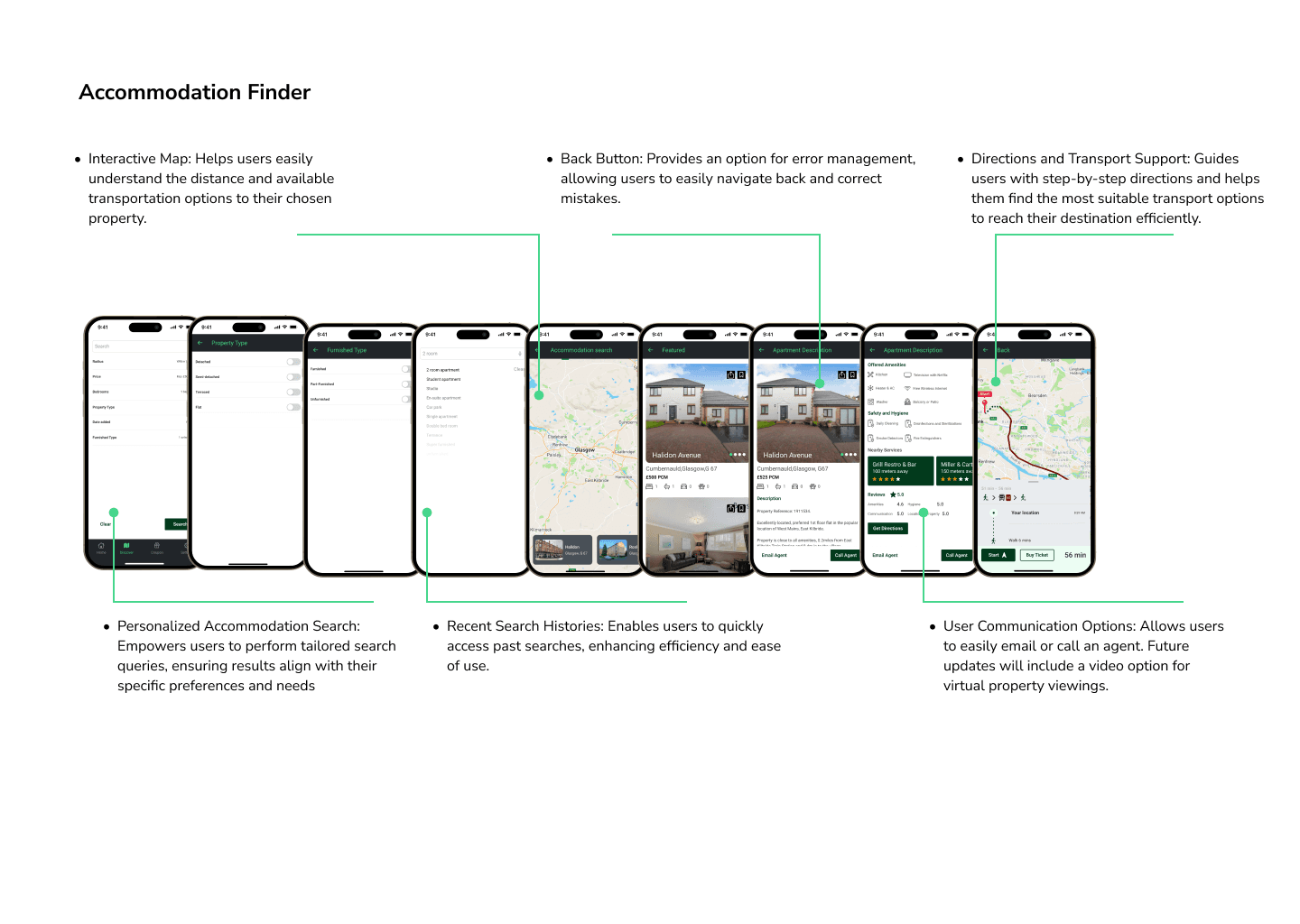
Accommodation Search Screens
Job Search Screens
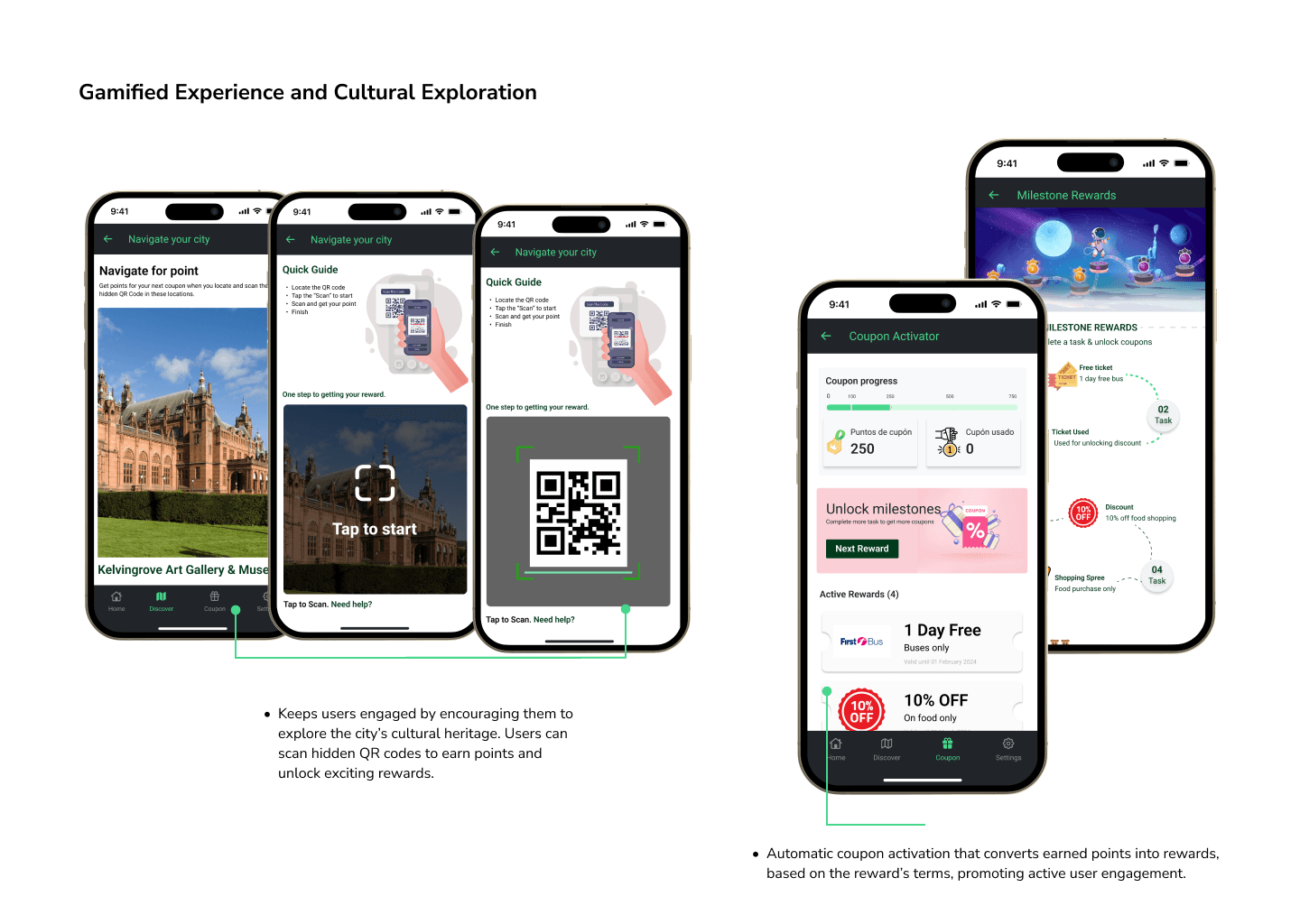
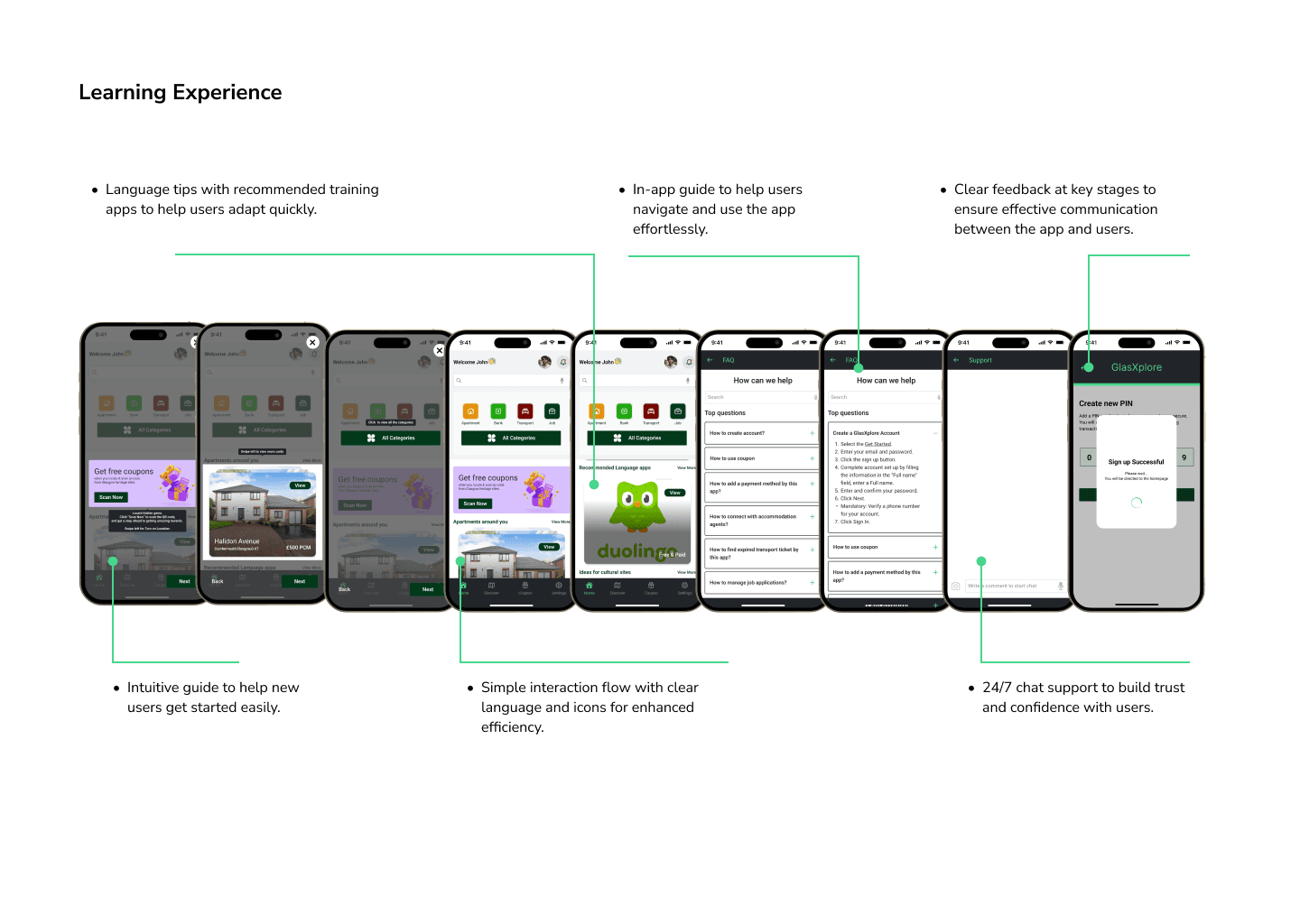
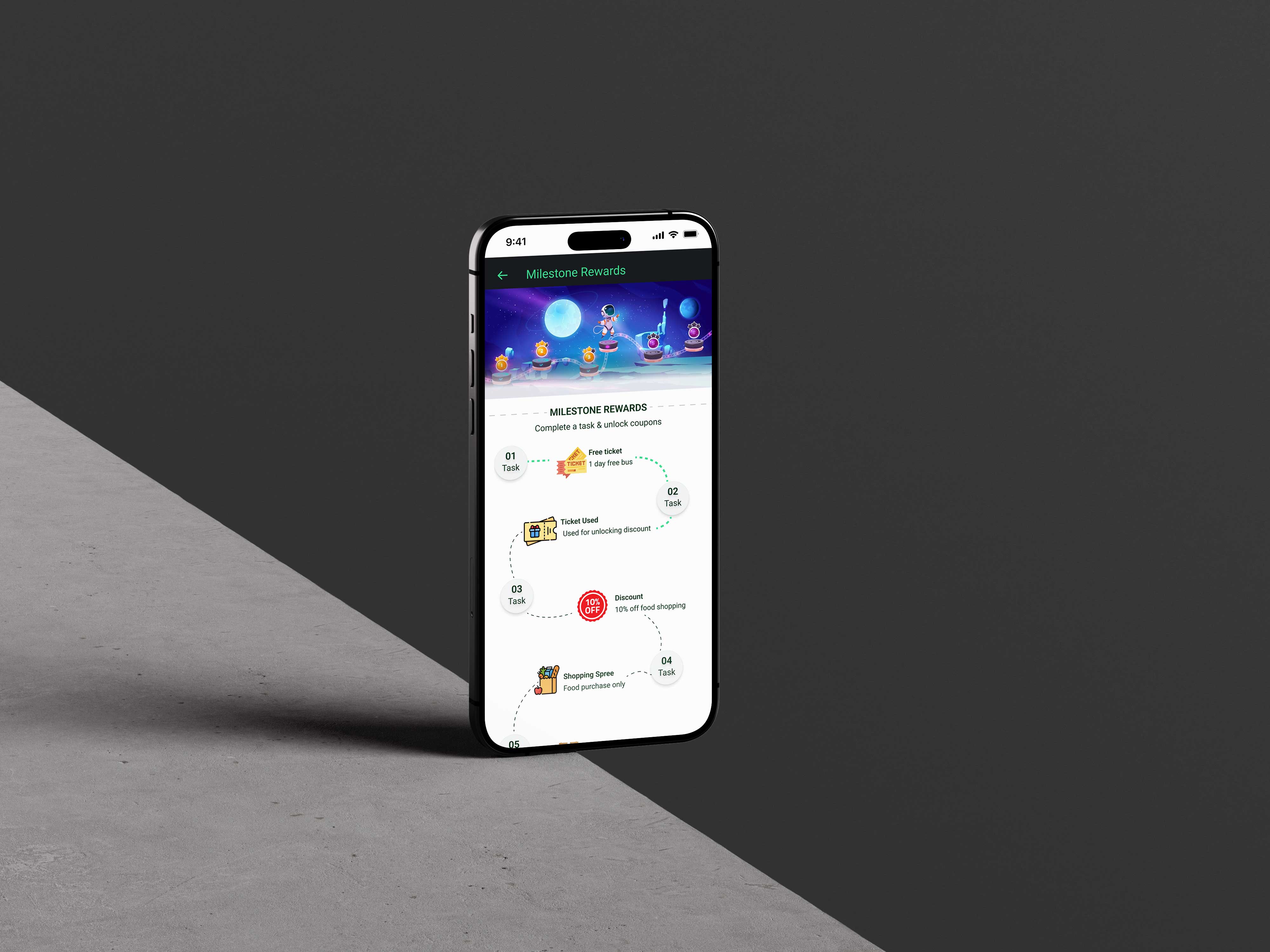
Settings, Gamification, and FAQs Screens
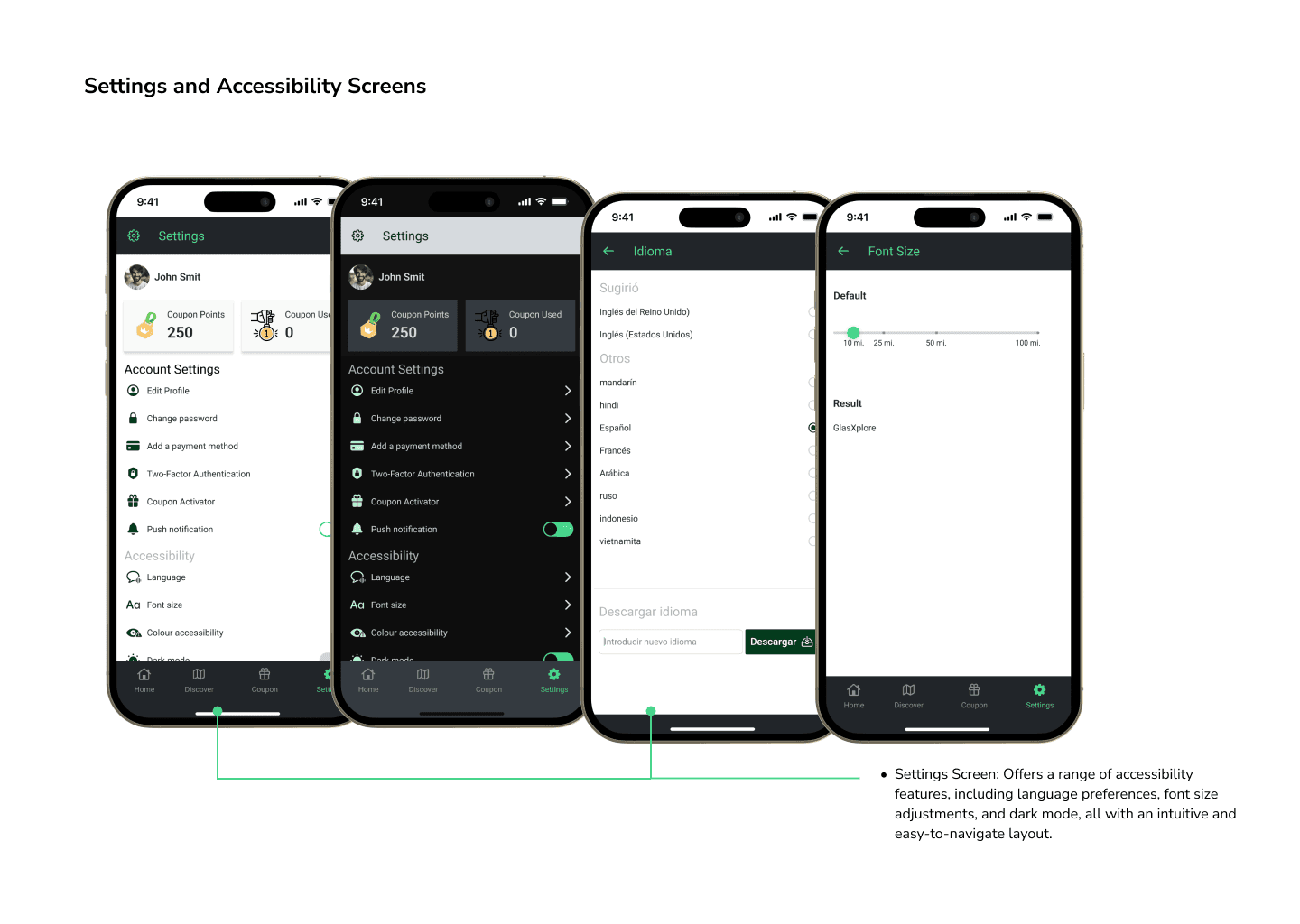
Accessibility Screens
Visual Design & Component
As the project progressed from wireframes to high-fidelity designs, a style guide was developed to ensure consistency with GlasXplore’s objectives, voice, tone, and overall aesthetic. The designs adhered to key visual design principles, such as contrast, hierarchy, harmony, and balance, to create a cohesive and engaging user interface that enhances the student experience. Visual accessibility was a priority, with high-contrast colours chosen to improve legibility for users with visual impairments. Additionally, typography was carefully selected for readability, and adjustable text size settings were incorporated to accommodate users who require larger or clearer fonts.
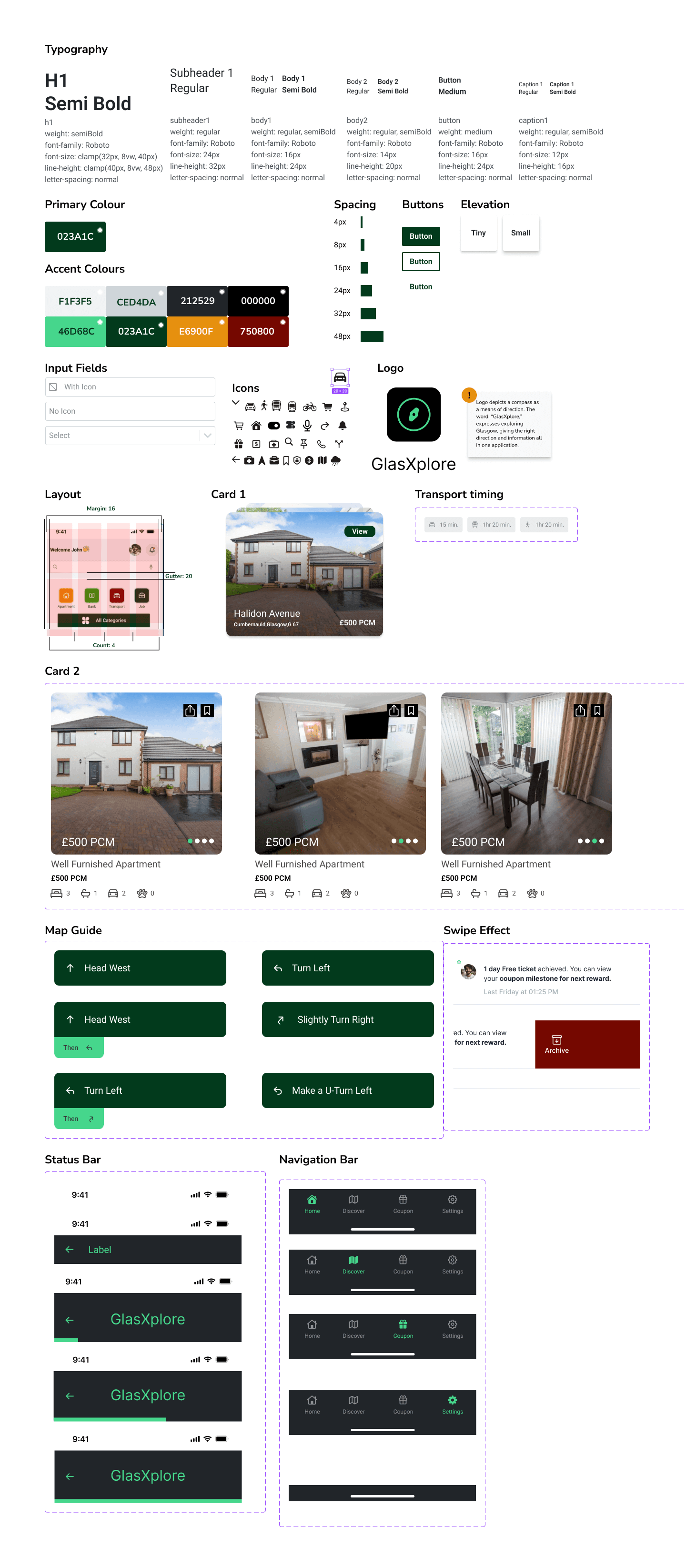
The visual guide for GlasXplore establishes a cohesive visual identity, emphasising guidance and support:
Logo: Features a compass guide, symbolising the app’s focus on helping students navigate their journey.
Colour Palette: Greens represent growth and new beginnings, reds convey energy and passion, yellows signify optimism and hope, while black and grey provide sophistication and neutrality.
Typography: "Roboto" is chosen for headers, giving a modern and engaging look.
Icons: Simple and recognisable icons are used to improve usability and ensure clear communication.
User Testing and Iteration
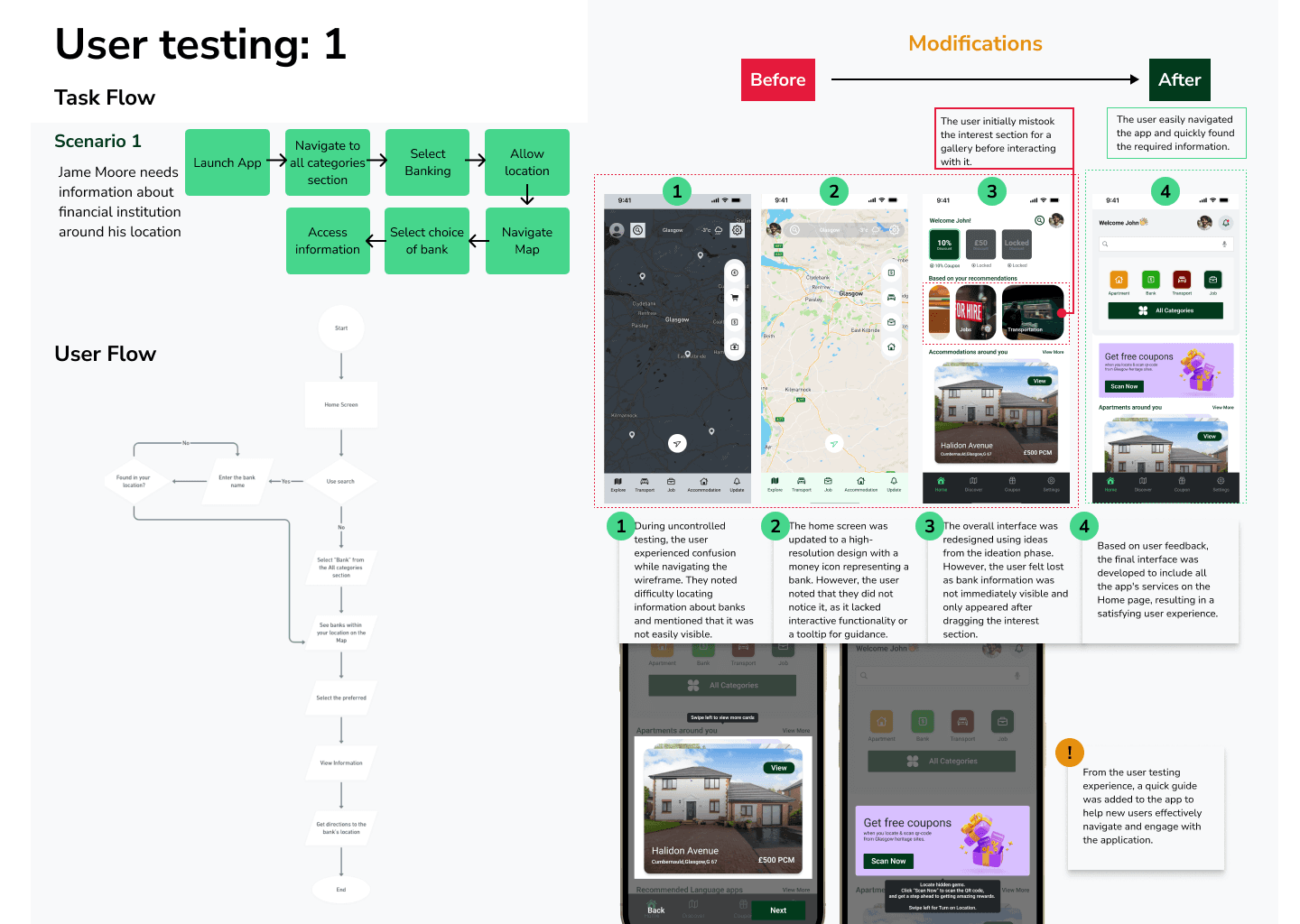
User testing played a crucial role in developing GlasXplore to ensure the app effectively meets the needs of its target users. Before conducting usability testing, the wireframe was refined into a high-fidelity interface. This decision enhanced users' emotional connection by making the app feel real and immersive. By presenting a more polished design, users could interact with the app in a way that closely resembled the final product, leading to more accurate and reliable feedback. The usability test focused on assessing the app's navigation, functionality, and overall user experience. For the project, participants were asked to complete key tasks, such as finding accommodation options, exploring job listings, or accessing transport information. Their interactions, feedback, and any challenges faced were carefully analysed to identify areas for improvement.
This iterative approach allowed for refining the design and functionality, ensuring that GlasXplore delivers a seamless, user-centred experience tailored to its audience.
Deliver Stage
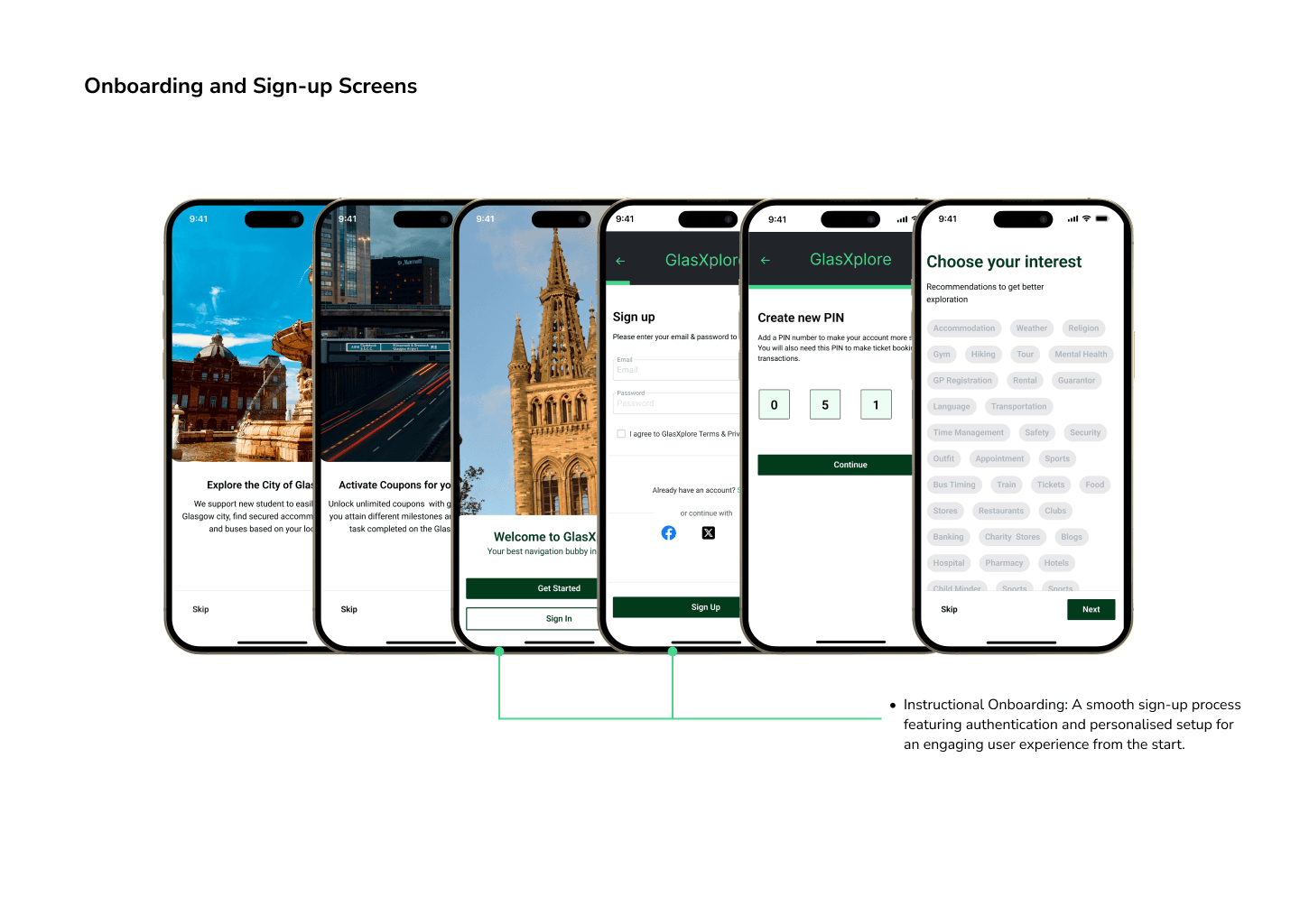
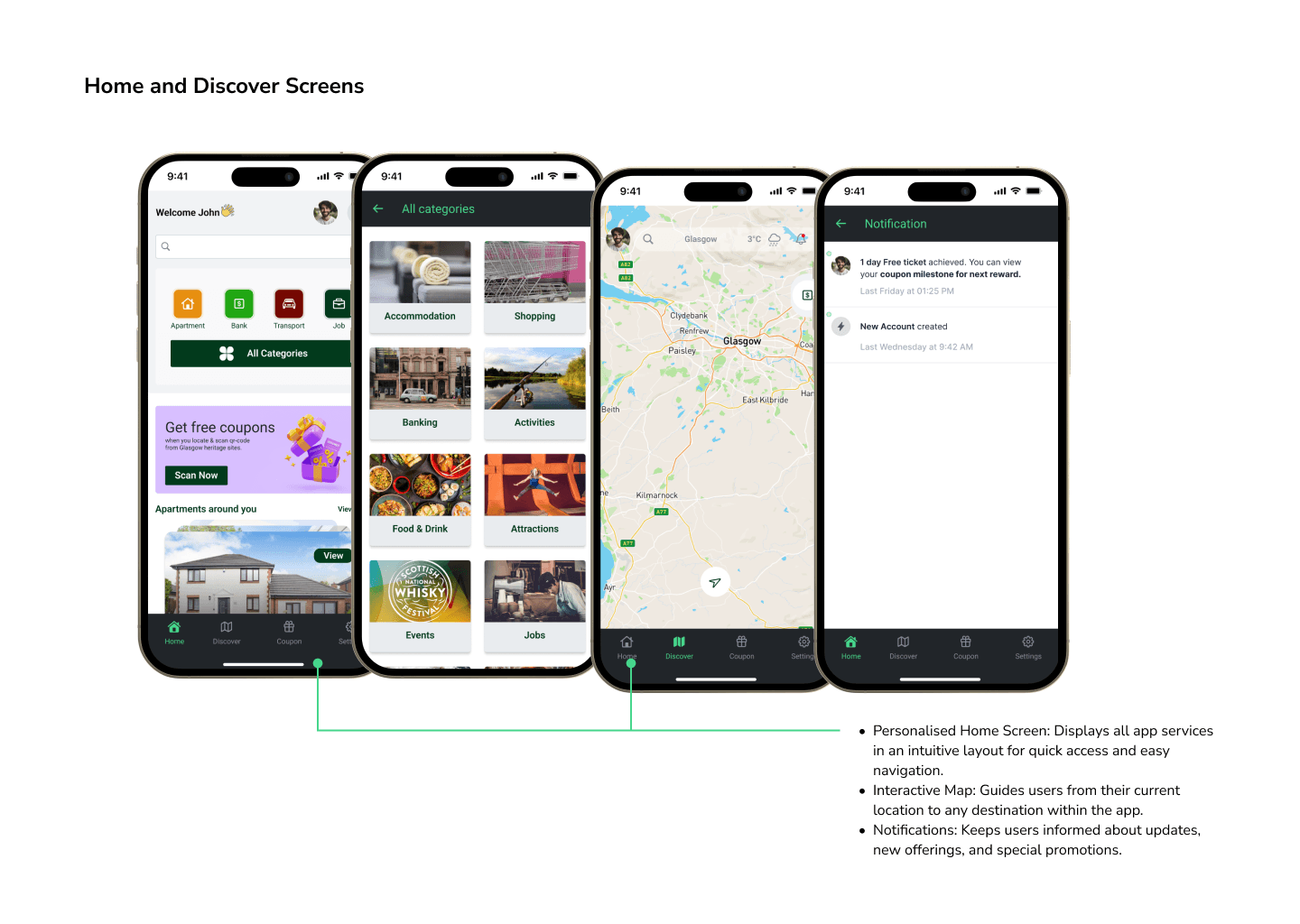
The Deliver stage focuses on finalising the design, addressing feedback, and preparing the app for development. It involves refining the product, resolving technical issues, and creating necessary support materials. The goal is to ensure the app is fully ready for development and aligns with user needs.

Other projects
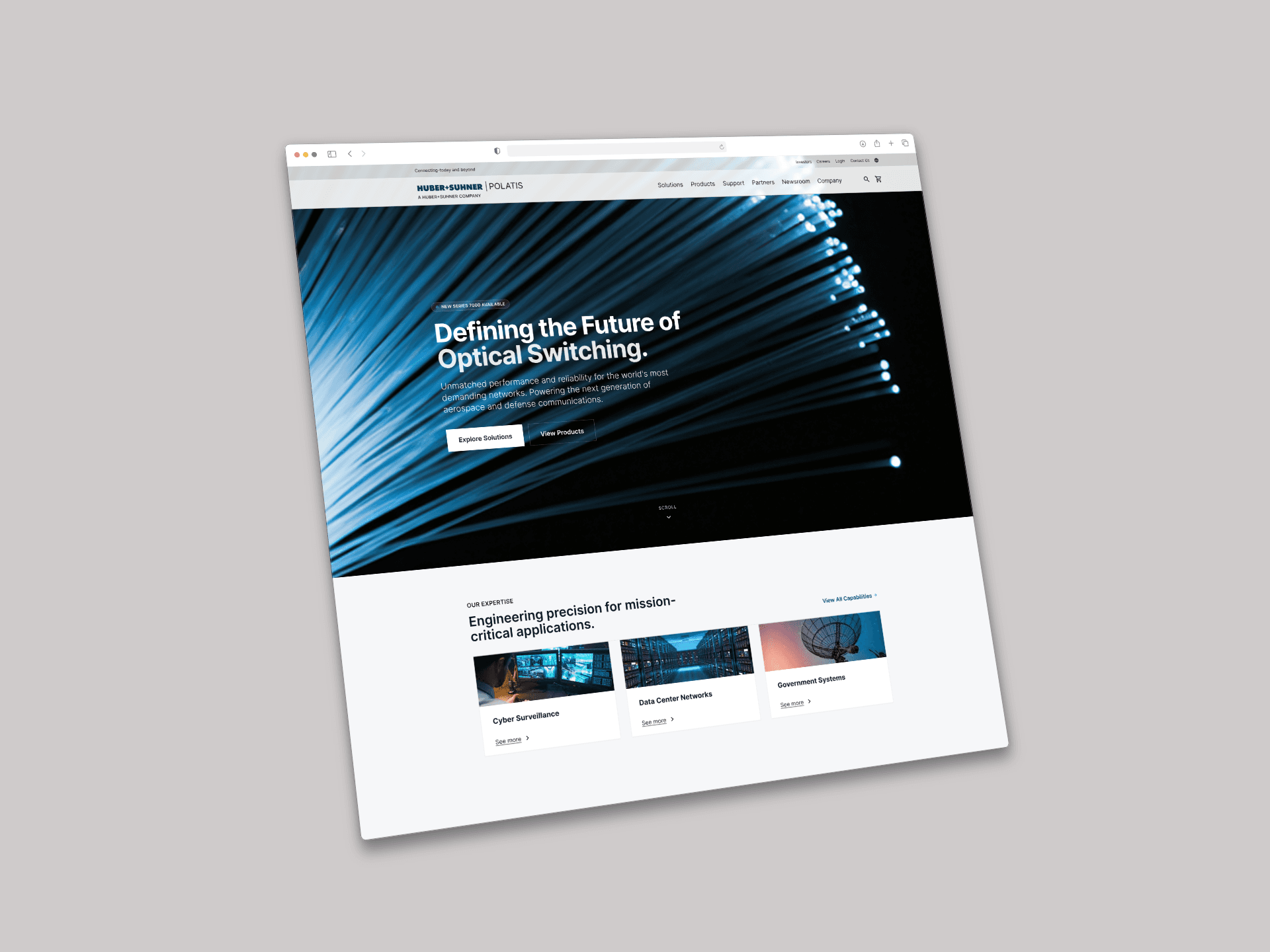
Polatis Huber +Suhner
Website Modification
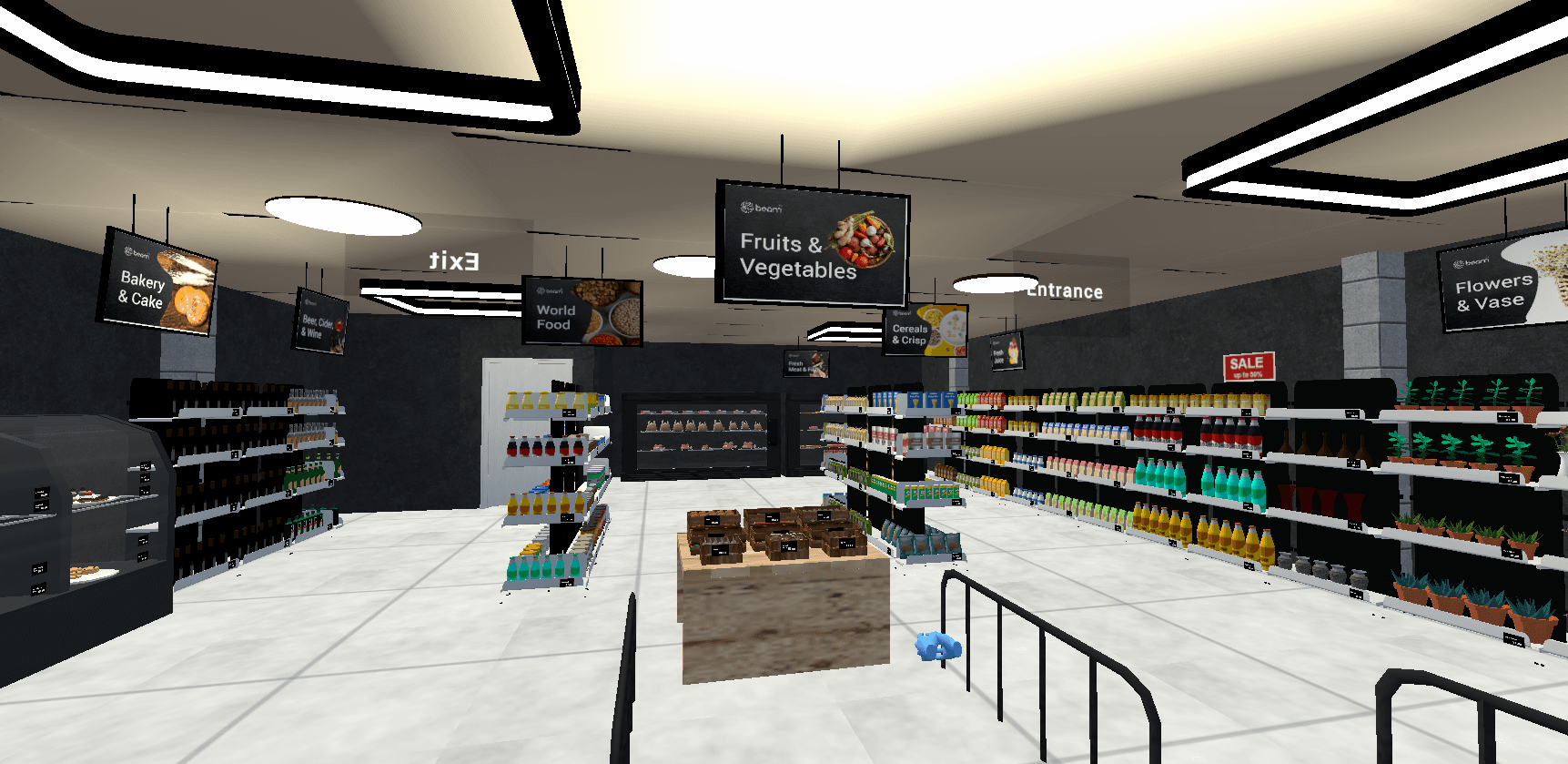
Beam 2.0® XR Application
Enhancing Grocery Shopping Accessibility: A Virtual Reality Solution for Remote Customers.
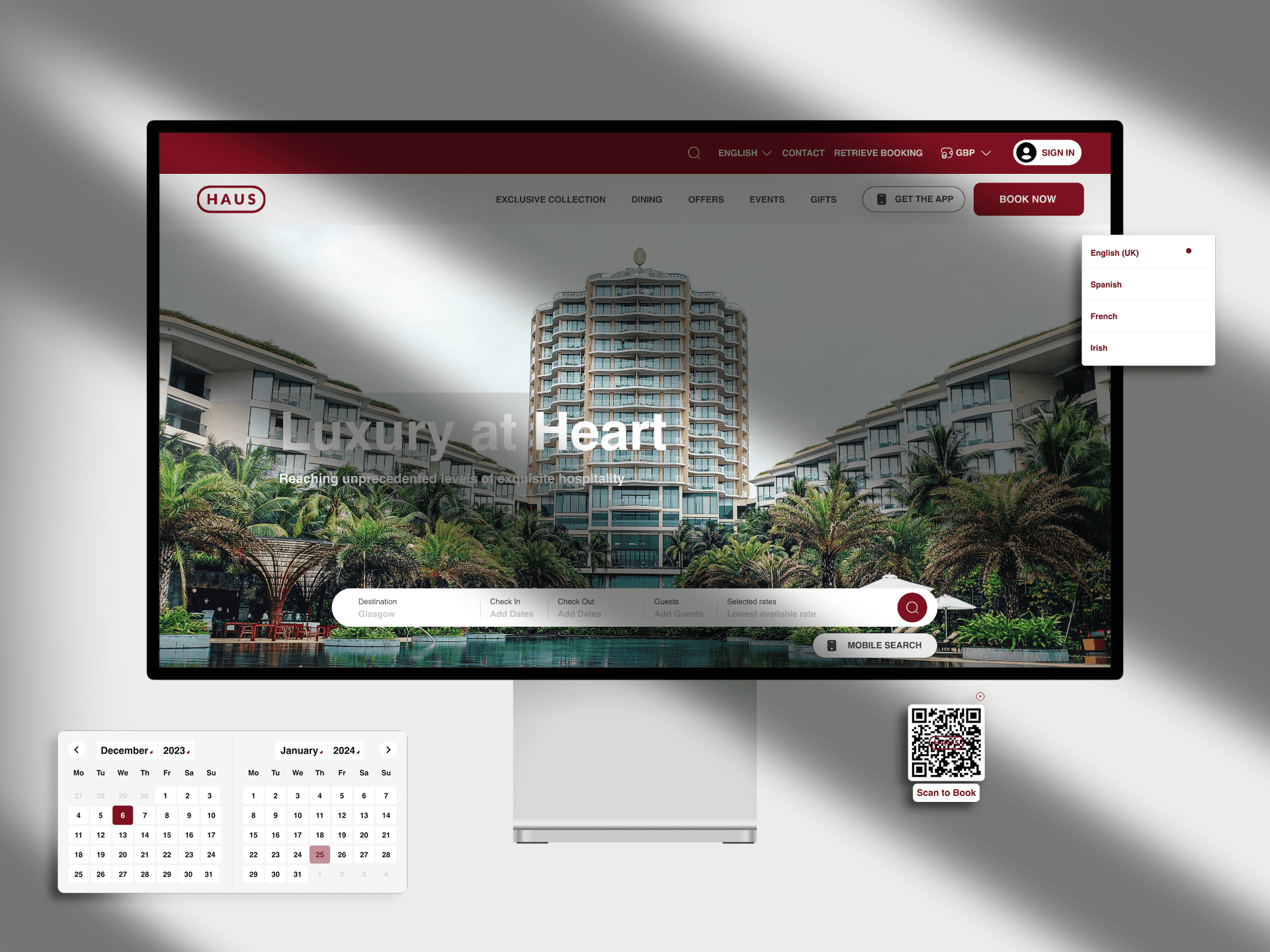
HAUS Hotel®
Designing a website for luxury, business-class digital experience for that connects professional guests through seamless, refined, and accessible design.